

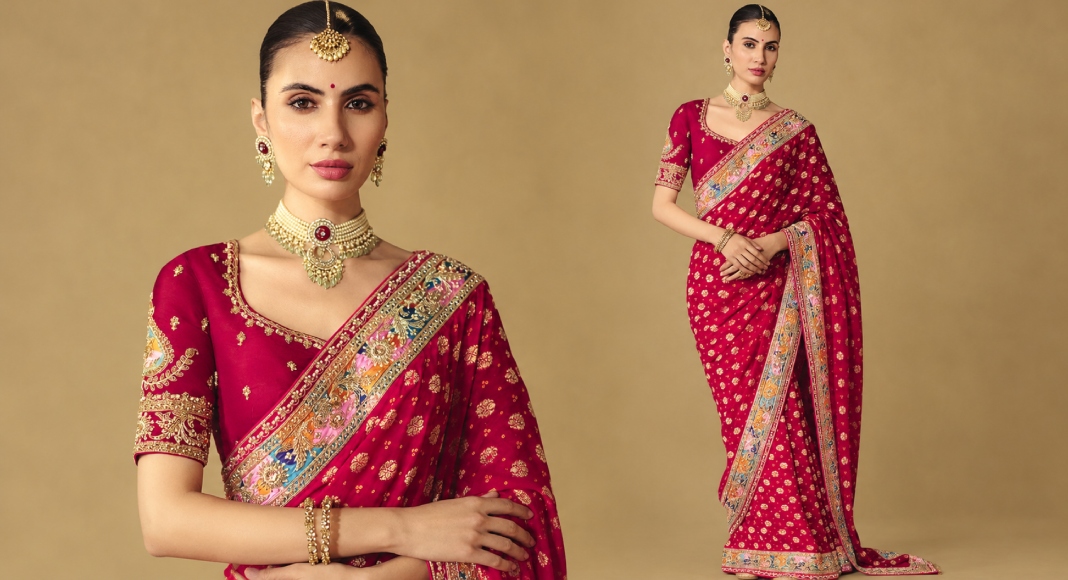
The venue, the theme, and the time of the wedding greatly influence your saree color choices. Bright yellows, fresh greens, corals, and pastels look their best in daylight, while reds, deep jewel tones, black, and metallics come alive under evening lights. An Indian wedding often runs from a morning Haldi to a late-night reception, so knowing which shade suits which hour helps you pick sarees for wedding functions that look right in person and in photographs.
Why Daylight and Evening Light Change a Saree’s Colour
Daylight is bright and slightly cool, so it shows a fabric’s true colour, weave, and texture. Light, airy shades glow outdoors, while very dark colours can look heavy and absorb heat in the afternoon sun.
Evening venues use warm indoor lighting, which adds a yellow cast. Deep shades gain richness under it, and zari, sequins, stones and metallic threads catch the light. Pale pastels, by contrast, can look washed out at night unless they carry embellishment. Stage lights and camera flash also favour saturated colours, which is why evening wedding sarees lean bold.
Best Saree Colours for Daytime Wedding Ceremonies
Daytime functions such as Haldi, Mehendi, puja, and morning pheras or muhurtham call for colours that feel fresh, cheerful, and comfortable in the heat.
Yellow
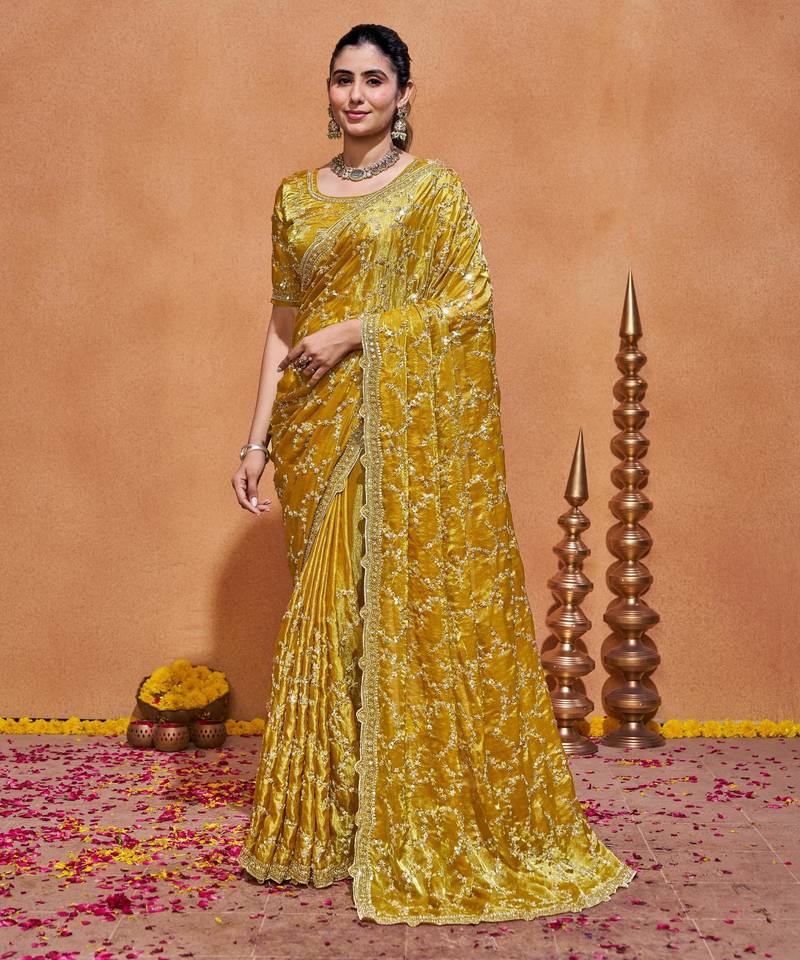
A yellow saree is the classic Haldi choice. Yellow is considered auspicious, and turmeric stains blend into it rather than spoiling the look. Mustard, turmeric, marigold, and lemon all photograph beautifully outdoors.
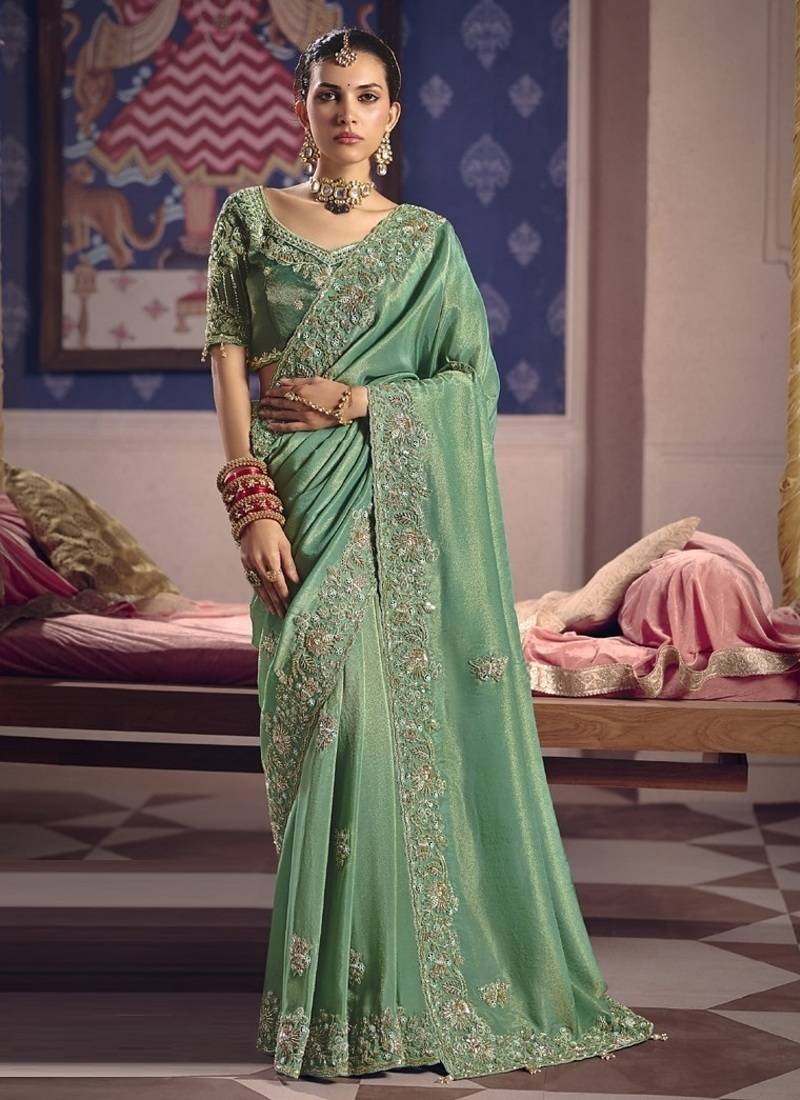
Green
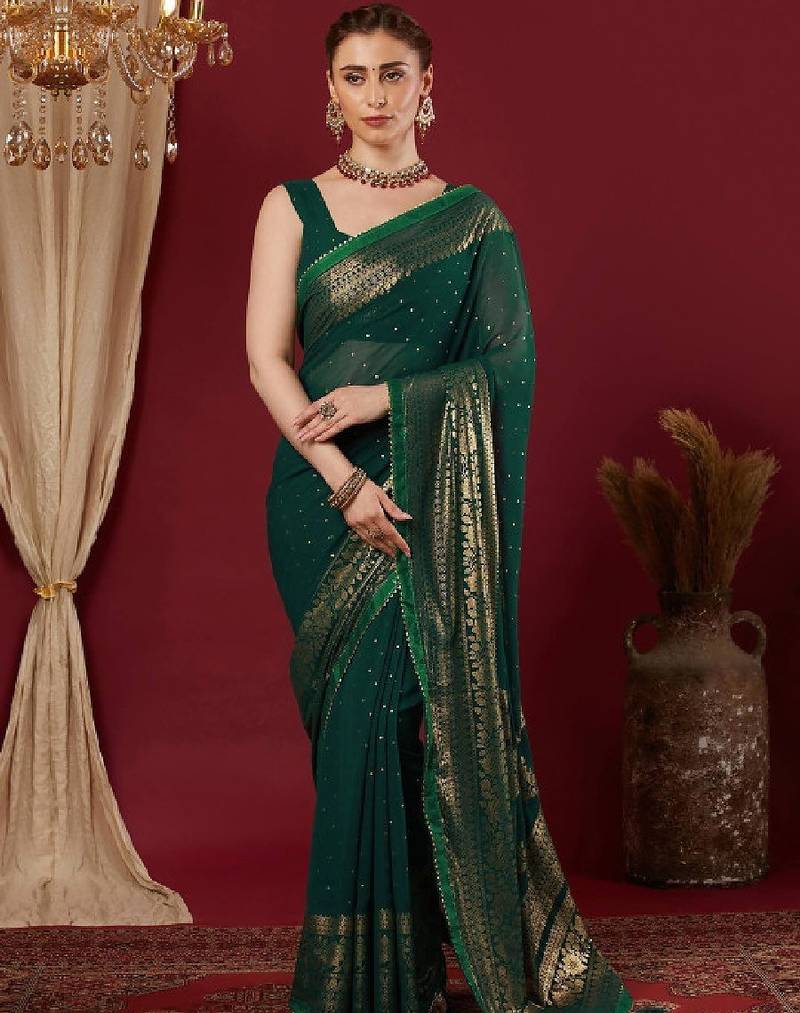
A green saree is the most popular Mehendi saree, as green stands for growth, fertility, and new beginnings. Parrot green, mint, pistachio, and olive feel lively against floral decor, while bottle green with a gold border suits a traditional daytime puja.
Orange, Coral and Peach
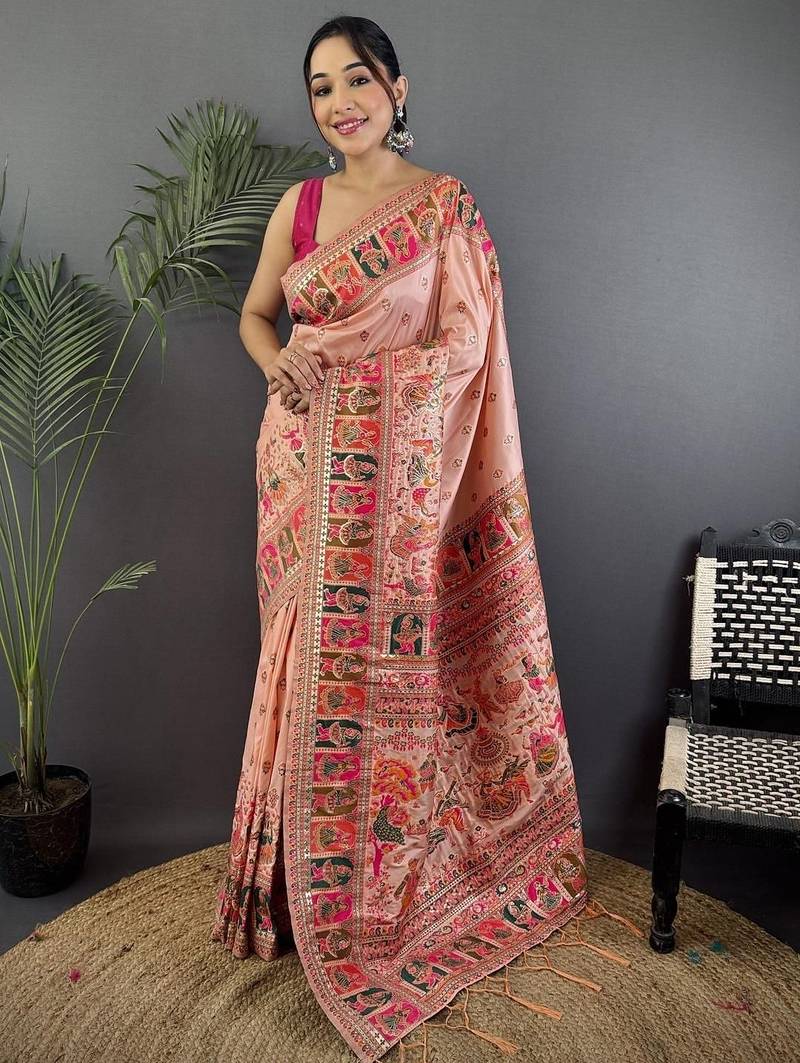
These warm shades suit sunrise and late-morning ceremonies. Coral flatters almost every skin tone, and peach color looks soft without fading into the background. They are a good alternative for anyone who wants colour but not the full brightness of yellow.
Pastels
Powder blue, lilac, blush pink, sage and lavender suit garden weddings, brunch ceremonies and morning pheras. Organza, tissue and net designer sarees in pastels, finished with pearl, resham or light sequin work, look elegant and stay breathable.
Ivory
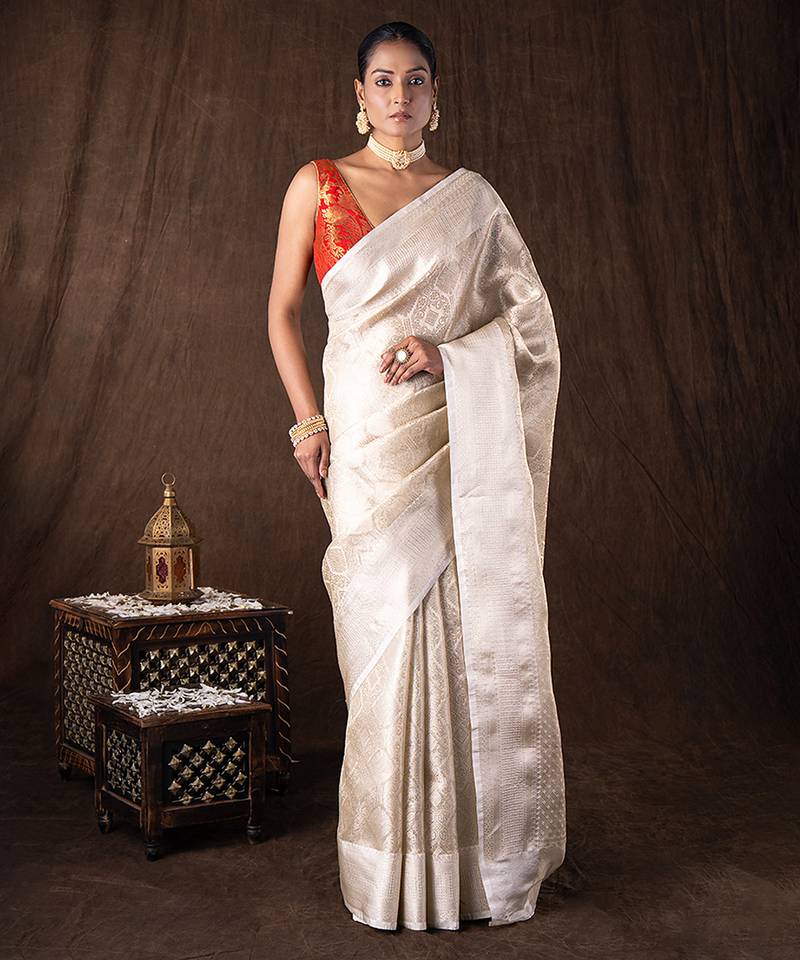
Ivory with a gold border, such as a Kerala kasavu, a cream Kanjeevaram or a pale Banarasi, is an evergreen daytime option. It is especially common at South Indian morning muhurtham ceremonies.
Best Saree Colours for Evening Wedding Ceremonies
Evening functions such as the sangeet, the night wedding and the reception reward richer, more dramatic colours.
Red and Maroon
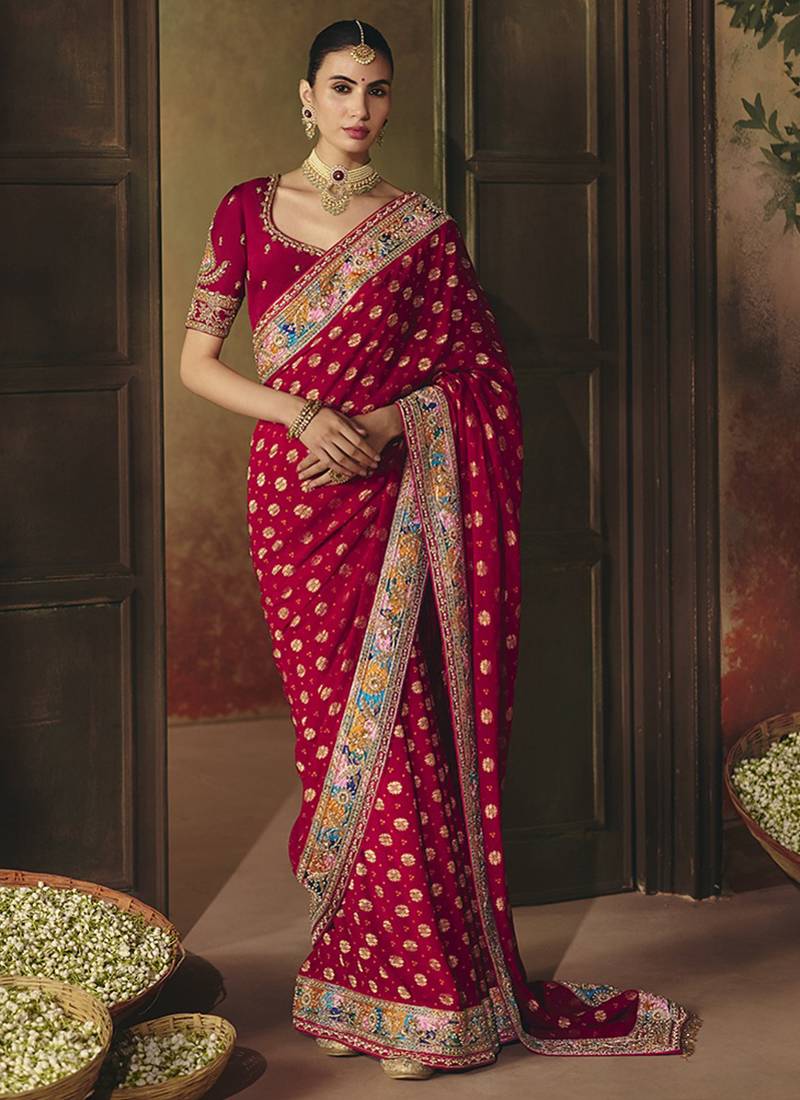
Red sarees are the heart of Indian wedding fashion and symbolise love, prosperity and marital bliss. Under warm lights, crimson, cherry, maroon and wine look regal and photograph with depth. Bright red is traditionally the bride’s colour, so guests can choose deeper variants such as oxblood, rust or wine to stay festive without competing.
Jewel Tones
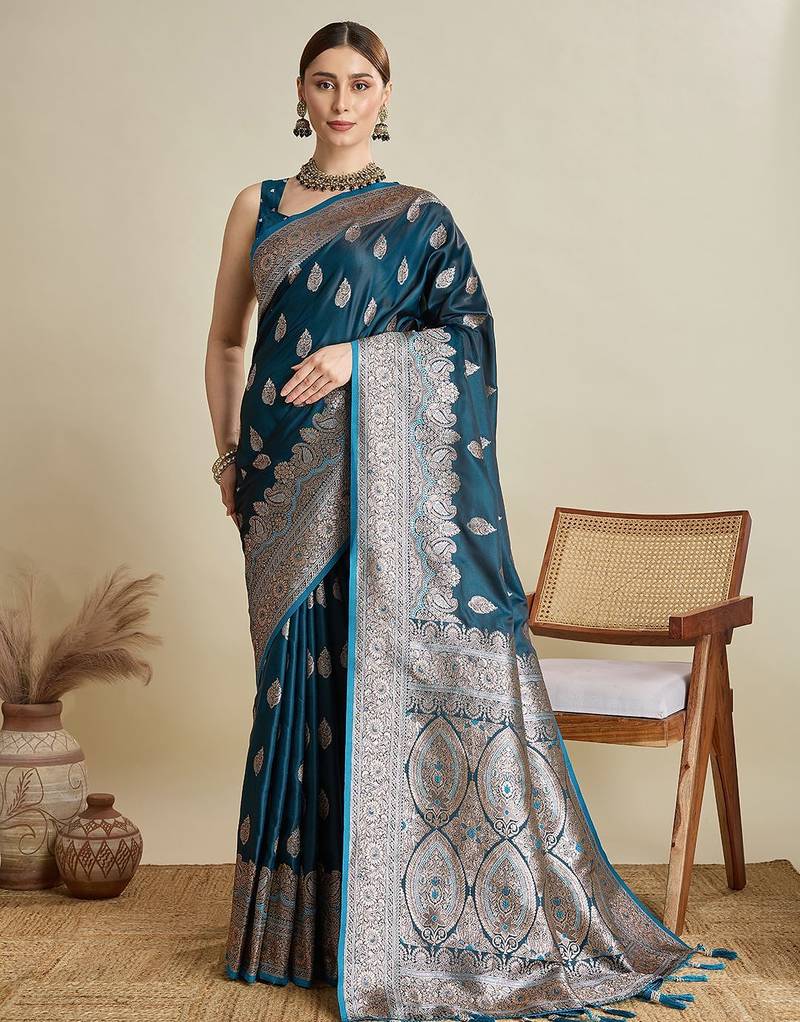
Emerald, sapphire, royal blue, amethyst, ruby and teal are made for the night. A designer saree in velvet, Banarasi katan silk or satin in these hues, finished with zardozi, dabka or stonework, catches light with every movement.
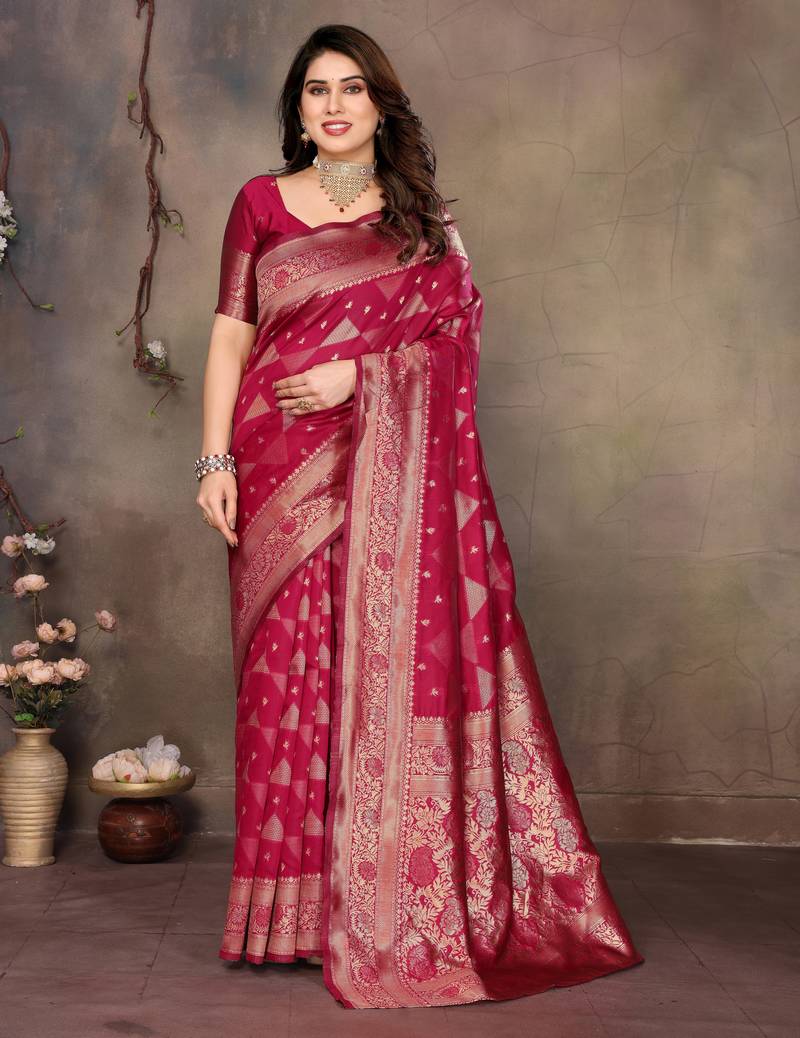
Magenta and Rani Pink
Rani pink and magenta are traditional festive colours that glow under evening lights. A rani pink Kanjeevaram with a gold zari border is a safe, striking choice for close family members.
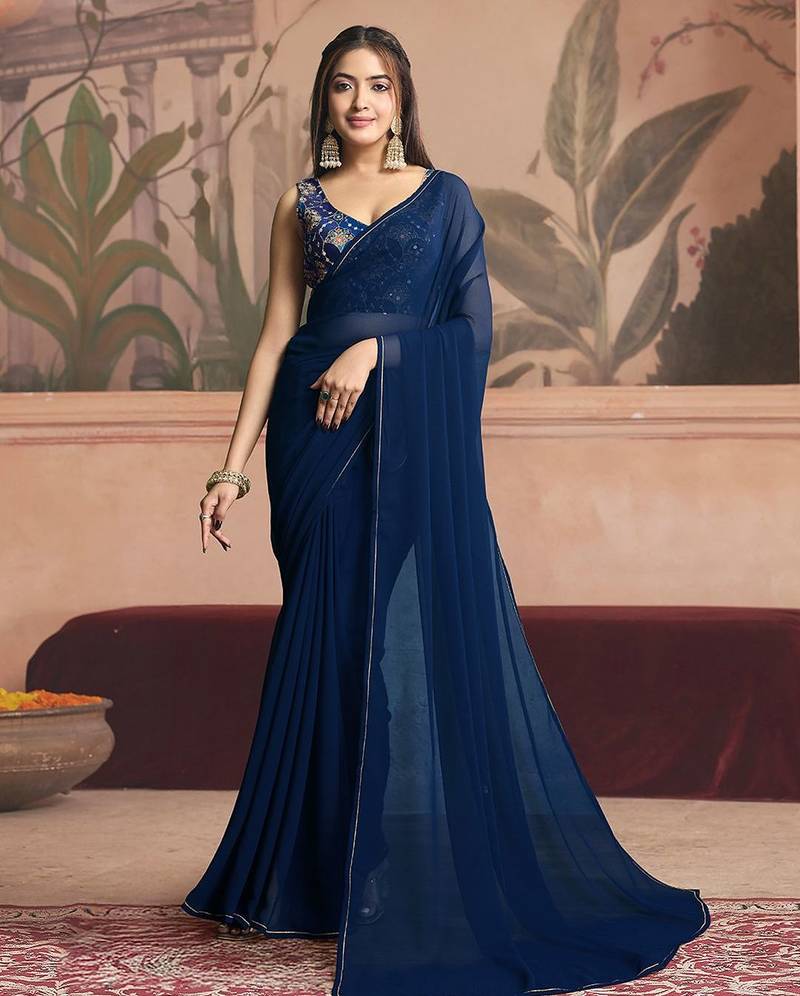
Black, Navy and Midnight Blue
Once avoided at weddings, black, navy and midnight blue are now popular for receptions and cocktail nights. Sequined georgette or embellished net in these shades looks modern and glamorous.
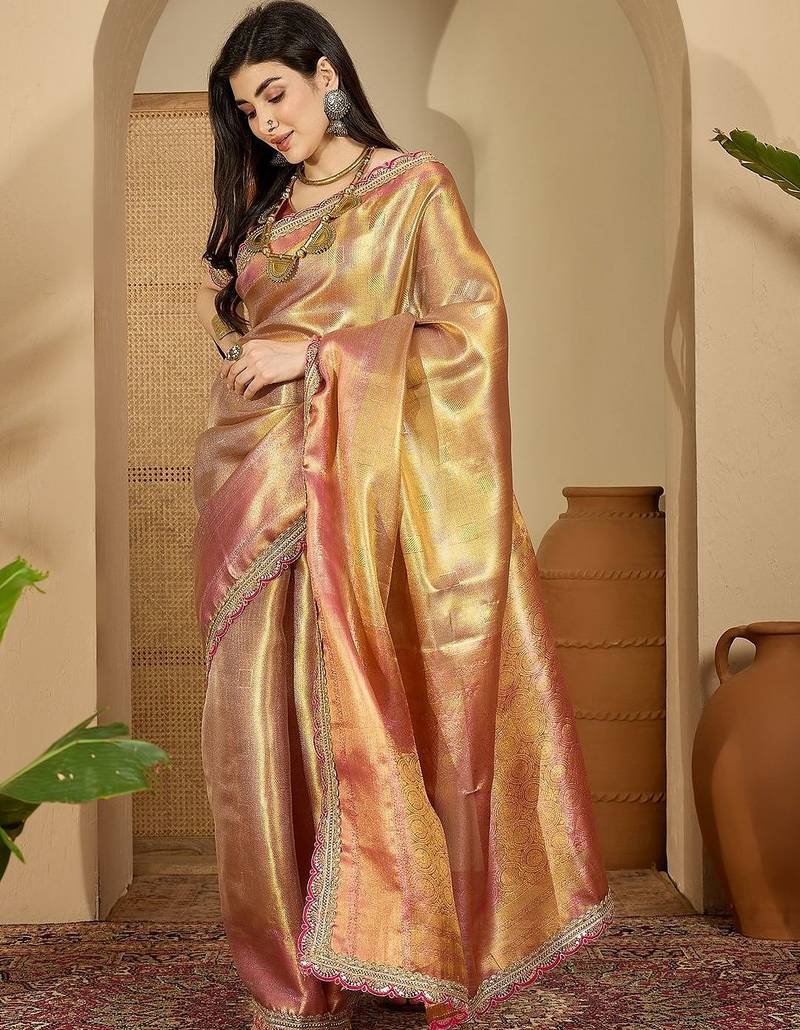
Metallics
Gold, silver, champagne and rose-gold tissue sarees shimmer under chandeliers and suit sangeet nights and reception parties.
Bridal Sarees: Matching the Colour to the Muhurat
Bridal sarees should suit the hour of the main ceremony. Daytime brides can choose lighter reds, coral, orange, or ivory-and-red Kanjeevarams that feel fresh in natural light. Evening brides can choose deep red, maroon, or magenta in heavy Banarasi or Kanjeevaram silk, where gold zari truly comes alive.
Many brides now plan two looks: a pastel or yellow wedding saree for the morning rituals and a dramatic red one for the evening. Regional traditions also matter, such as the red-and-white saree of Bengali brides or the gold-bordered silk of South Indian brides.
Conclusion
The best wedding sarees match both the ceremony and the light it takes place in. Save yellow, green, and pastels for daytime rituals, keep red sarees, jewel tones, and metallics for the evening, and you will look radiant from the first Haldi to the final reception.