

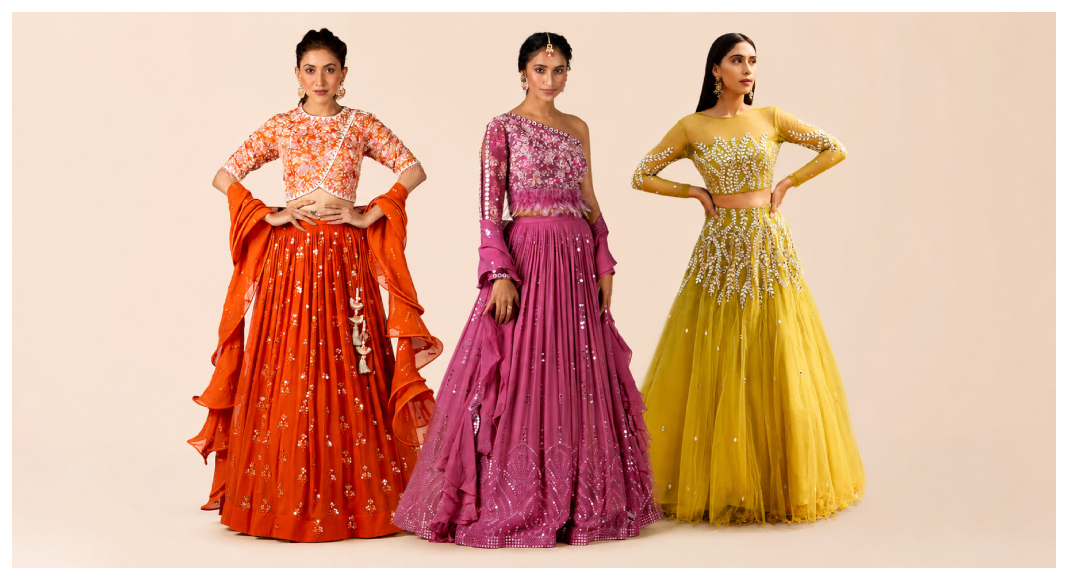
There is something instantly festive about a mirror work lehenga. The tiny reflective details catch the light as you move, giving your outfit a beautiful sparkle without making it feel like you are wearing layers of sequins. But mirror work is not simply a modern trend. It has deep roots in Indian textile traditions and has changed considerably over the years. From colorful traditional outfits to contemporary bridal collections, mirror work lehengas have traveled through different eras of Indian fashion.
Where Mirror Work Began
Mirror work has strong associations with the textile traditions of Gujarat and Rajasthan. The technique is often known as shisha or abla Bharat and involves attaching small mirrors to fabric using decorative embroidery stitches. Traditionally, experts combined mirrors with colorful threads, floral elements, and delicate patterns. The embroidery was used on a variety of garments and textiles rather than being limited to lehengas. As Indian fashion evolved and the lehenga became increasingly popular for weddings and festive celebrations, designers began incorporating this traditional embroidery into more elaborate outfits.
The Early Years: Colorful And Heavily Embroidered
Traditional mirror work lehengas were known for their vibrant colors and detailed embroidery. Bright reds, oranges, pinks, and yellows were often paired with contrasting threads and reflective mirrors. When mirror work became more prominent in festive lehengas, these colorful combinations continued to influence designs. Skirts, blouses, and dupattas could feature dense embroidery, creating an outfit that immediately felt celebratory. The focus was on craftsmanship and visual richness.
2000s: Traditional Craft Meets Modern Fashion
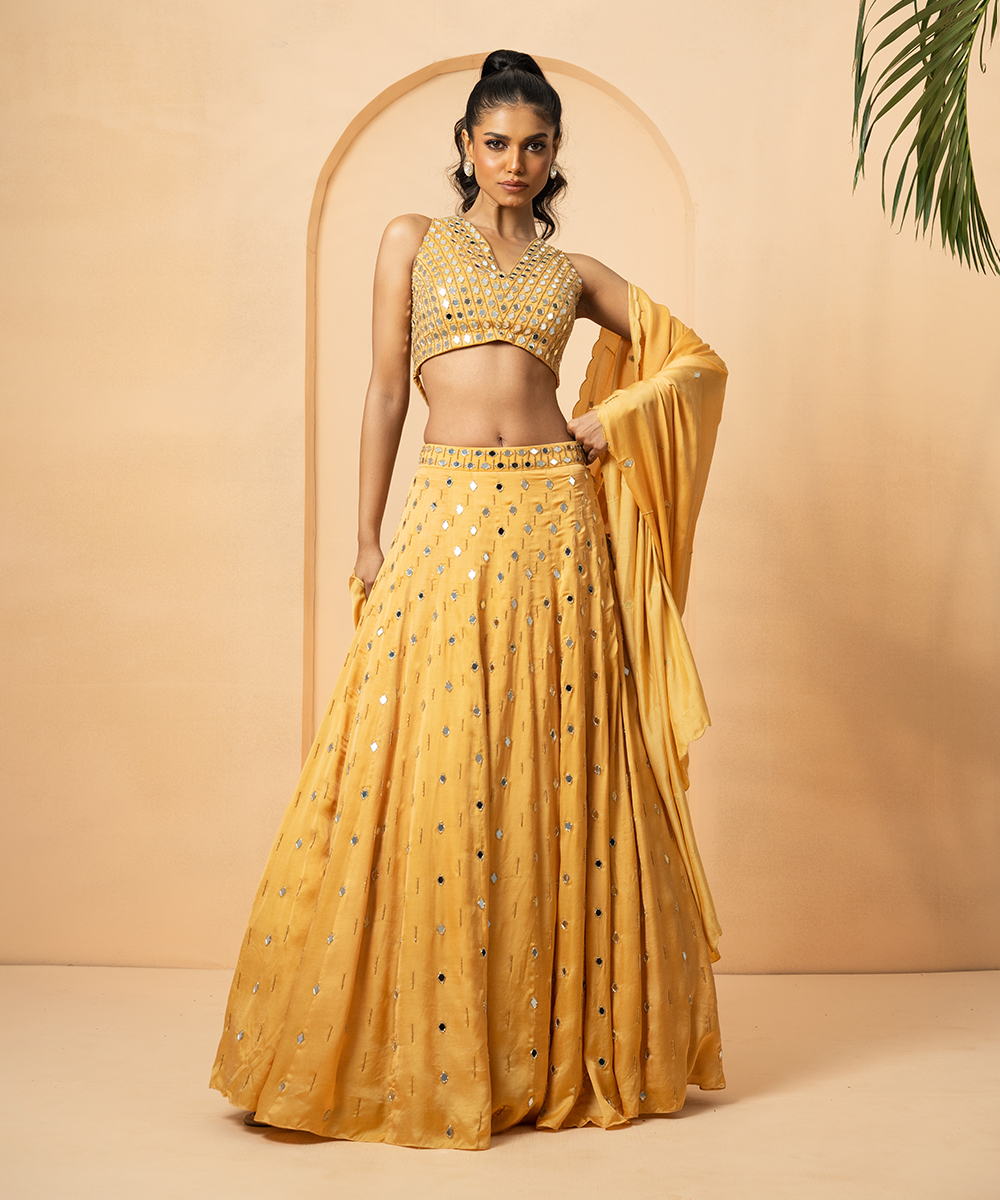
The 2000s brought significant changes to Indian fashion. Designers started experimenting with lighter fabrics, contemporary silhouettes, and new ways of presenting traditional embroidery. Mirror work evolved along with these changes. Instead of covering the entire lehenga, designers began placing mirrors more selectively along borders and blouse designs. This made mirror work designs more versatile. A heavily embellished style could still be chosen for a grand wedding, while a lighter design could work for a festive lunch or smaller celebration.
The 2010s: Mirror Work Gets A Contemporary Update
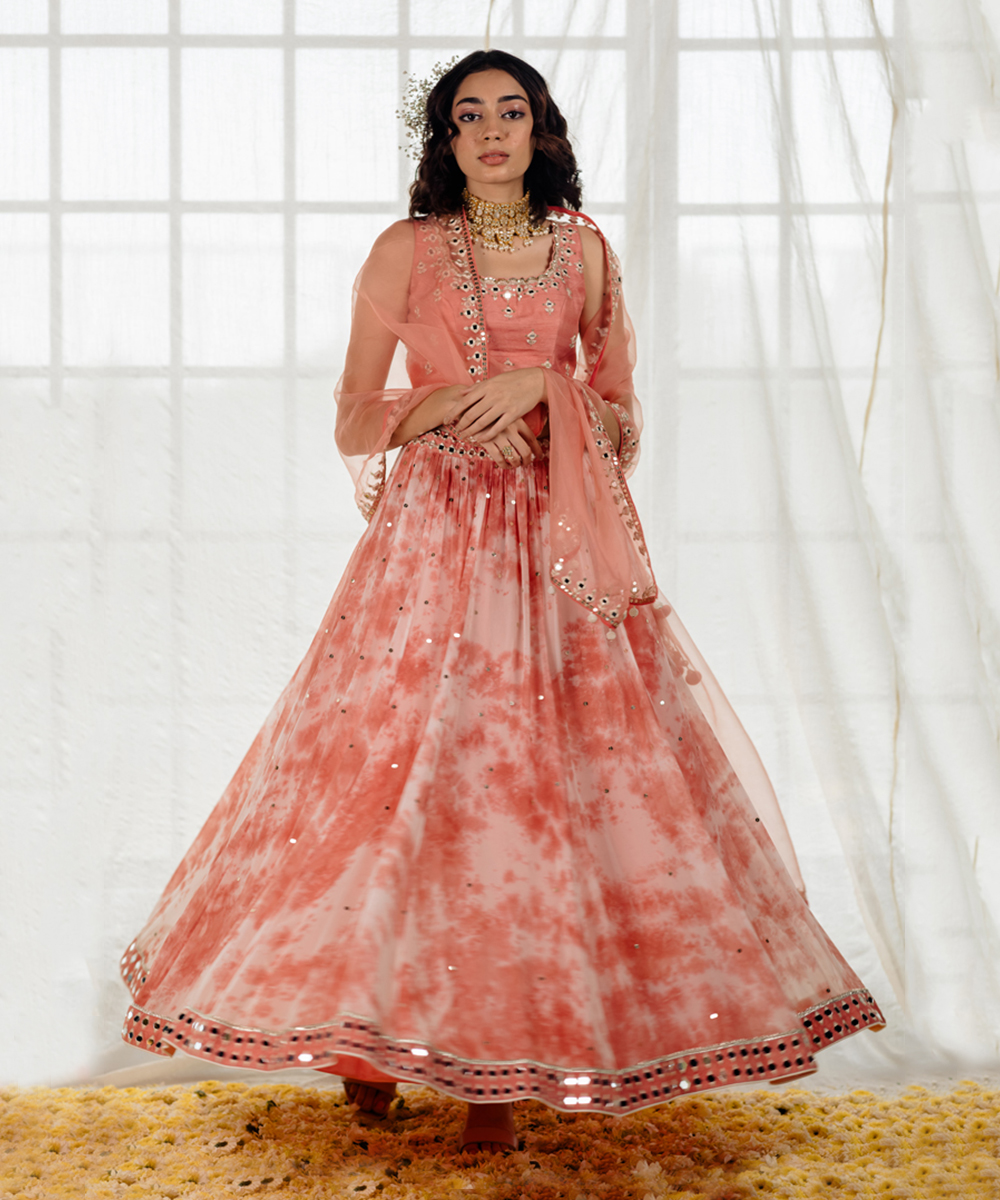
In the next decades, designers pushed the technique further. Mirrors were combined with zari and thread embroidery while different shapes and sizes were introduced to create more varied patterns. The lehenga silhouette also changed. Crop-style blouses, flowing skirts, and lighter dupattas gave mirror embroidery a more modern setting. Bridal fashion also became more experimental during this time. Brides began exploring colors beyond traditional red and maroon, such as blush pink, ivory, beige, and powder blue.
Mirror Work Lehengas Today
Today there is no single way to wear a mirror work lehenga. You can find heavily embroidered designs with mirrors spread across the skirt and the blouse, and minimalist styles that use small mirrors that are used as subtle accents. Modern designers use mirror work on fabrics like silk, georgette, organza, and chiffon. Some designs combine it with delicate thread work, while others use large mirrors to create a bolder look. Engagement, sangeet ceremonies, festive parties, and receptions can all be occasions for a well-designed mirror work lehenga.

How To Style A Mirror Work Lehenga
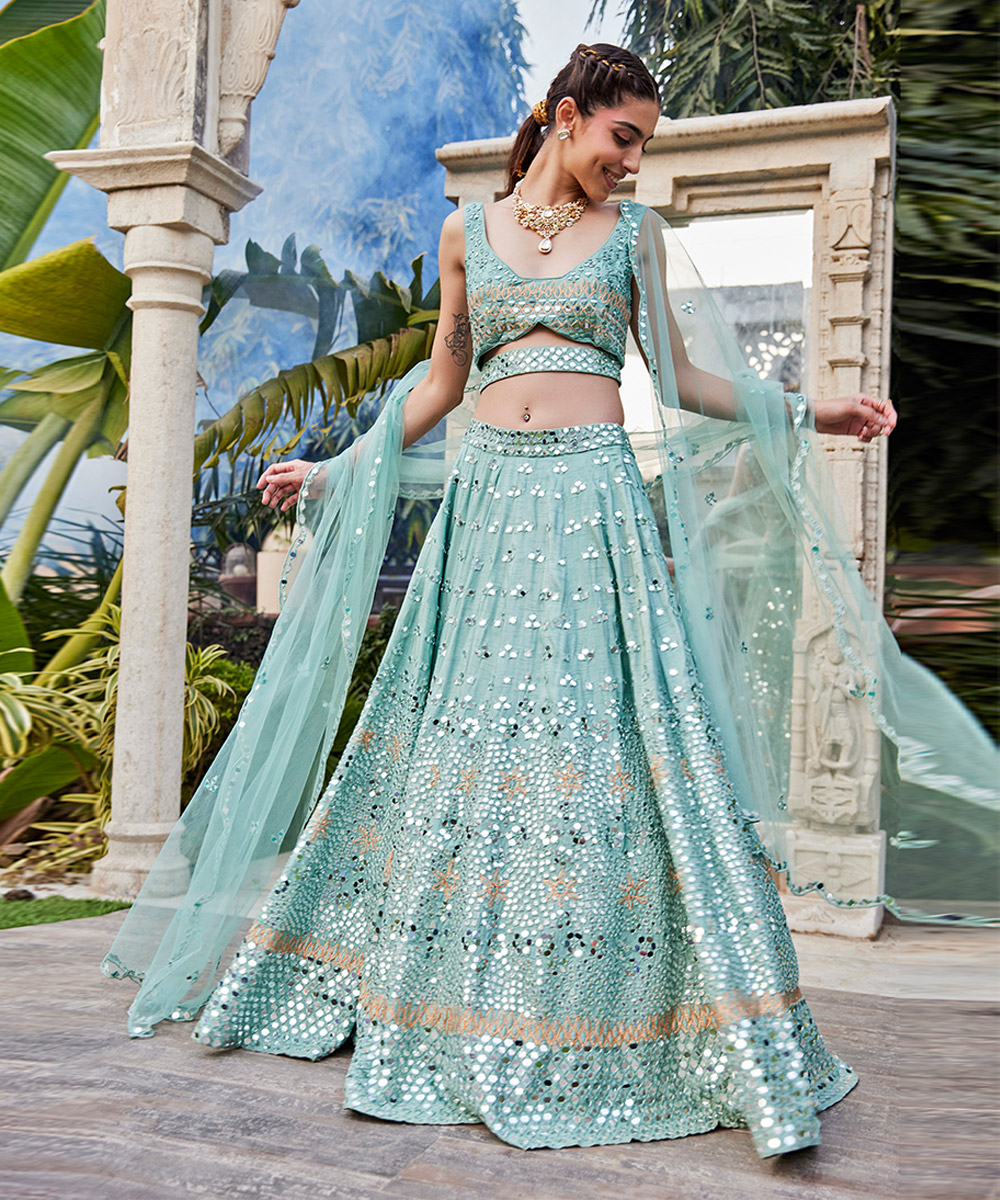
The easiest way to style a mirror work outfit is to consider the amount of embellishments already present. If your lehenga is heavily decorated, statement earrings and a maang tikka might be enough. Adding a very heavy necklace as well can sometimes make the outfit feel too busy. With a lighter mirror work lehenga design, you have more freedom to experiment with necklaces or an embellished dupatta. The occasion should also influence your choice. Softer colors and lightweight fabrics work particularly well for daytime events, while deeper shades and heavier embroidery can create a striking look for evening functions. So, the story of mirror work lehengas is really a story of how Indian fashion continues to reinterpret its traditional crafts. What began as a royal embroidery technique has moved into contemporary wedding and festive wardrobes, changing colors and silhouettes. Flexibility is what keeps mirror work lehengas relevant.