

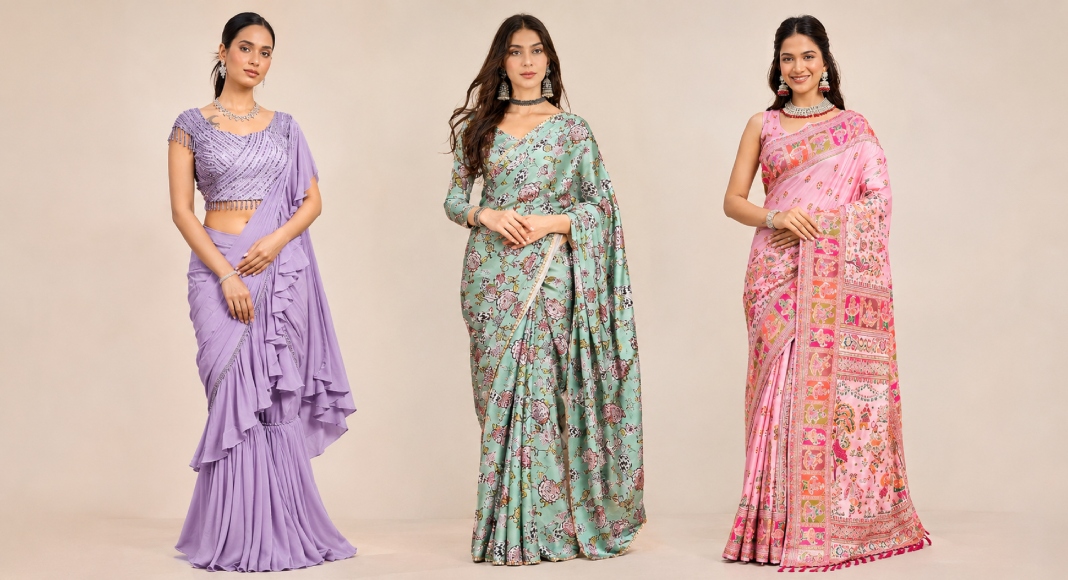
Nothing turns heads at an Indian wedding quite like a well-chosen wedding saree. Six yards of silk, zari, and color can take you from the mehndi to the reception in style, as long as you match the drape to the moment. Breezy sarees for weddings work for daytime events, rich silk sarees suit the ceremony, and statement styles shine after dark. Whether you’re a first-time wearer or a seasoned pro, this guide covers what to wear for each event, so that you shine at every event in style.
Choose Your Saree by Wedding Event
Indian weddings usually span several events, often across a weekend.
- Engagement: An engagement saree can be elegant without being too heavy. Soft silk, organza, or georgette in pastels or jewel tones looks polished at a ring ceremony.
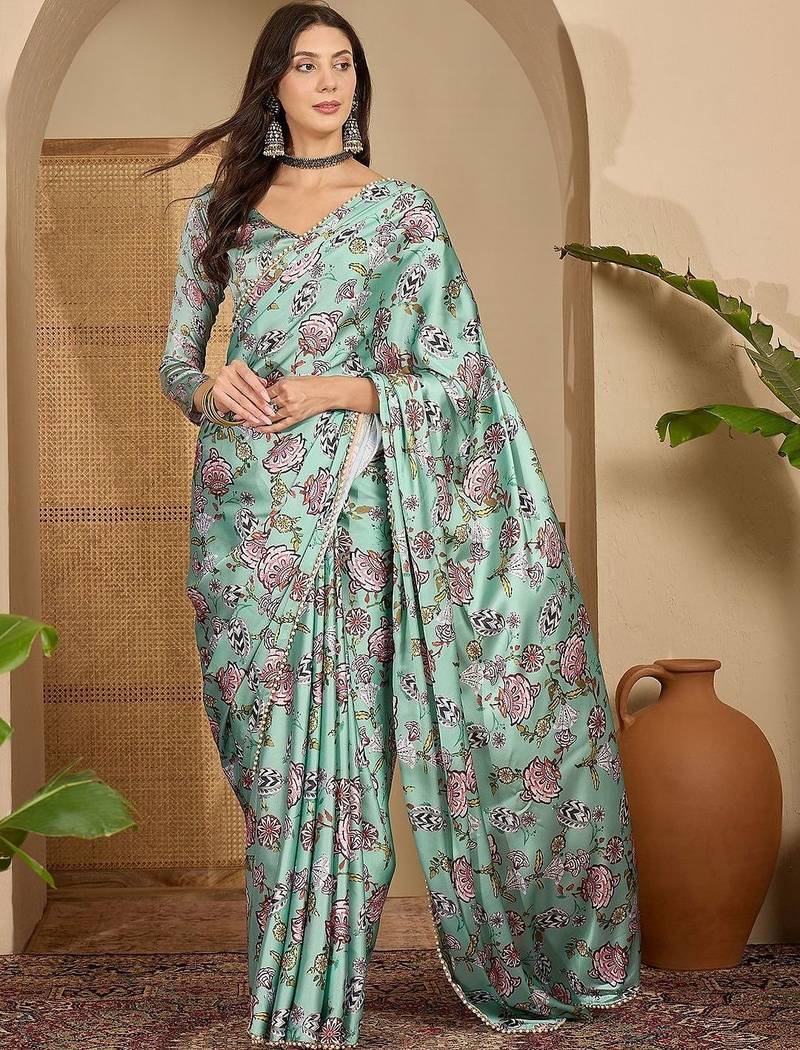
- Haldi and Mehndi: These daytime events call for cotton, chanderi or light printed sarees in yellow, green, or orange.
- Sangeet: Choose something that lets you dance. Georgette or chiffon sarees with sequins or mirror work catch the light on a ballroom dance floor. Keep the pallu pinned securely so it stays in place.
- Wedding Ceremony: This is the moment for traditional Indian sarees in silk, with zari borders and rich colors.
- Reception: A reception saree can be more modern. Sequinned, embellished, or pre-draped styles suit an evening party at a hotel or banquet hall.
Traditional Sarees for the Wedding Ceremony
Traditional sarees are a classic choice for the main ceremony. These three weaves are especially popular.
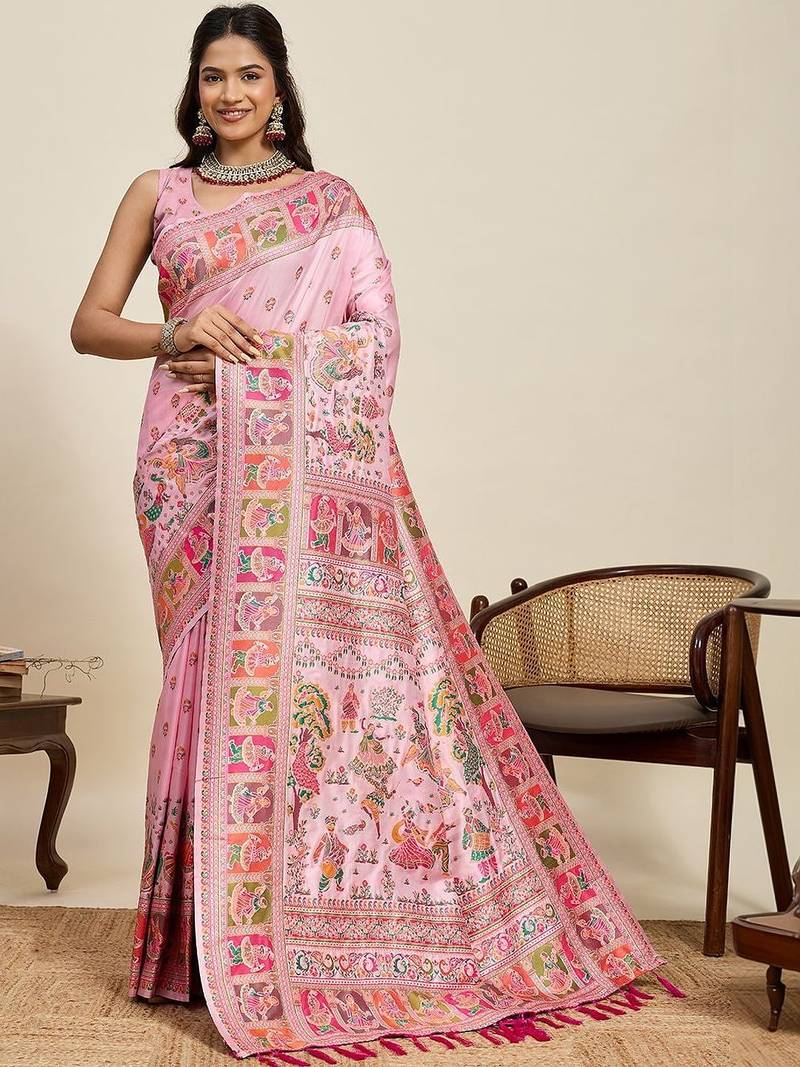
- Banarasi Sarees: Banarasi sarees are woven in Varanasi and known for their rich zari brocade, floral motifs, and heavy pallus. They look regal at North Indian weddings and evening ceremonies.
- Kanjivaram Sarees: Kanjivaram sarees come from Kanchipuram in Tamil Nadu. They’re woven from mulberry silk, with bold contrast borders and temple motifs. They’re heavier than most silks, so they suit indoor or cooler-weather ceremonies, and they’re a natural fit for South Indian weddings.
- Paithani Sarees: Paithani sarees are handwoven in Paithan, Maharashtra. Their pallus often feature peacock and lotus motifs in vibrant colors. They’re a beautiful choice for Maharashtrian weddings.
If you know the couple’s background, choosing a weave from their region is a thoughtful touch.
Designer and Modern Sarees
Designer sarees offer a fresh take on tradition. Pre draped sarees, ruffle sarees, and saree gowns are easy to wear and look stylish at receptions and cocktail events. Organza sarees with delicate embroidery suit daytime functions, while sequinned sarees in metallic or jewel tones stand out at night. Many come with ready-made blouses, which save time.
Pre-draped options are also a smart pick if you’ve never worn a saree before. They give you the full look without needing to master pleats and pinning.


Smart Saree Tips for Weddings in the USA
- Plan for the Weather: Weather and venues across the USA vary a lot. For outdoor fall or winter events, carry a shawl or a tailored jacket that complements your saree. For summer weddings, georgette and chiffon sarees will keep you cooler than heavy silk.
- Check the Blouse Before You Order: Many sarees come with unstitched blouse fabric, while others include a ready-made blouse. If you want it ready to wear, look for a stitched blouse or a blouse stitching option on the product page.
- Order Early: Place your order a few weeks before the wedding to allow time for delivery.
- Pack It with Care: Silk sarees travel best folded in a muslin cloth or saree bag, so the zari doesn’t snag.
- Choose Comfortable Footwear: Wedges or block heels are easier to walk and dance in than stilettos. Make sure the saree falls just above your shoes.
Find Your Wedding Saree
The right saree helps you feel confident through every event, from the engagement to the reception. Whether you choose a Banarasi silk, a Kanjivaram, or a modern pre-draped style, focus on comfort, fabric, and the mood of each function.