


Some outfits just sit in your closet for months at a time between wears. Usually, one of them is your lehenga. It’s for those very special moments, your cousin’s weddings or Diwali celebrations or the sangeets that finally bring the whole family into one room, no matter how many countries they’re scattered across.
We save our best lehengas for the occasions that matter, no matter where we live. These gaps become even longer if you live abroad and your lehenga is in storage for longer than on you. Good news: A well-maintained lehenga looks as gorgeous on its fifth outing as it did on its first. It depends on how you treat it when you store and carry it. Here are some ideas to help preserve the beauty of your lehengas, from the moment you take them out of your luggage to the day they go back into your closet.
Why You Should Clean Your Lehenga Before Storing It
Never pack up a lehenga that has been worn once and hasn’t been cleaned yet. Over time, dust, dried sweat, even a small amount of perfume or makeup can become embedded into the fabric of a lehenga. Over time, these stains tend to turn yellowish. Left too long, even stains that were easy to remove at first can permanently damage delicate fabrics. Therefore, always try to dry-clean or spot clean a lehenga immediately after an occasion while you still remember what type of stain caused it. Additionally, do not pack up a lehenga dress unless it is totally dry. Moisture inside the fabric allows mold and mildew to grow, which creates an unpleasant odor that is sometimes difficult to eliminate. Always clean your lehengas thoroughly, then let them dry completely before storing them.
How to Store Your Lehenga the Right Way
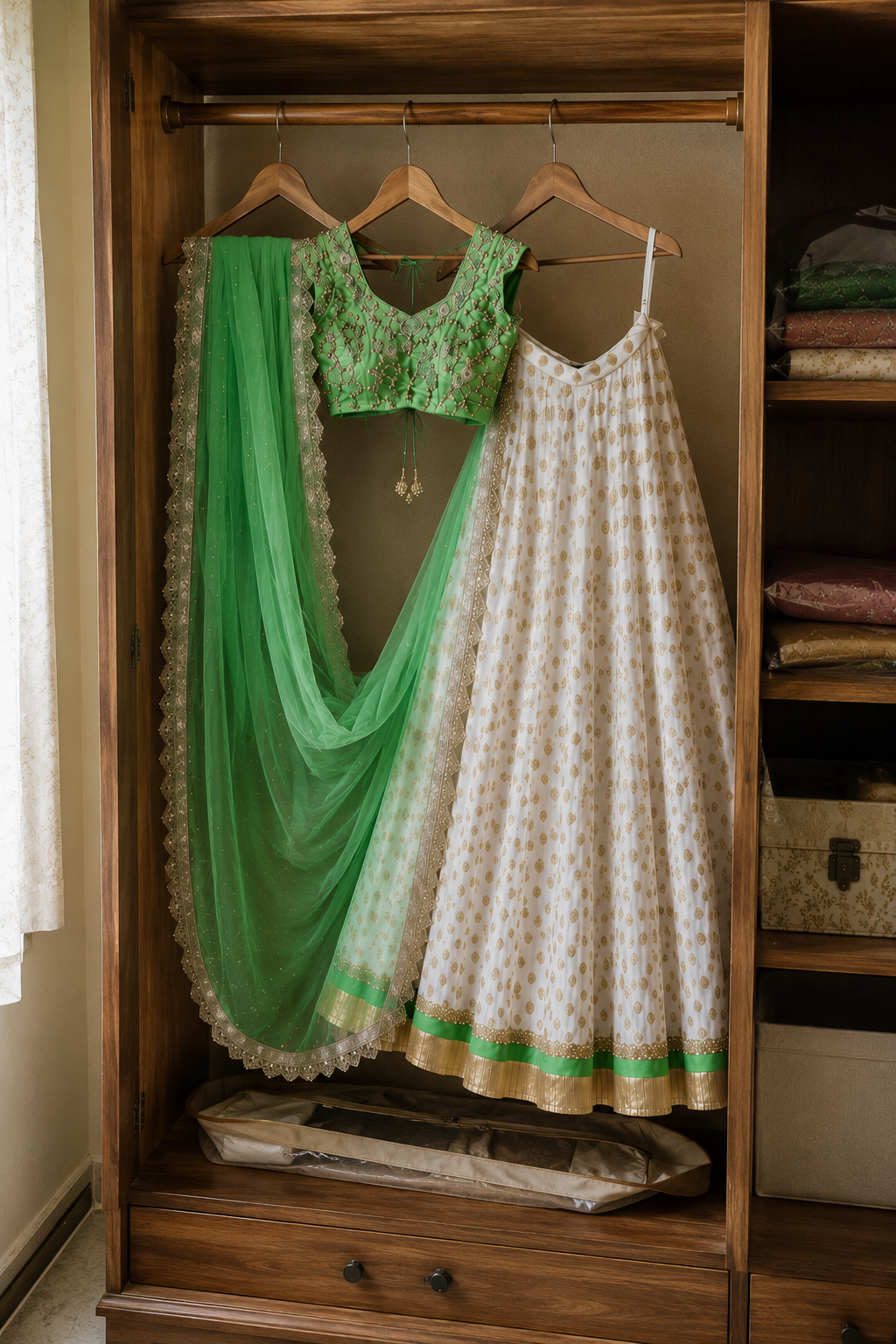
- Keep your lehenga in a cool area, that is clean, and dry.
- Skip the plastic wrap it arrives in, as it traps moisture and can discolor the fabric over time. Switch to a soft cotton or breathable garment bag instead.
- Determine if you should fold or hang based on how much the lehenga weighs:
- A heavier, fully worked lehenga is best stored folded, since hanging lets its own weight drag on the waist and stretch the fabric out of shape.
- A lighter lehenga can be hung, as long as it’s on a padded hanger or supported by proper loops at the skirt.
- If you fold, do not apply too much pressure on heavy embroidery areas for extended periods of time, as this will create permanent creases in the fabric.
- Change the folds every couple of months to avoid excessive tension on any one fold.
- Keep it out of direct sunlight, which fades colors, and in a location that is completely away from dampness or water.
- Check on your Indian lehenga periodically. Five minutes of inspection today can spare you a damaged lehenga down the line.
How to Pack Your Lehenga Safely for Travel
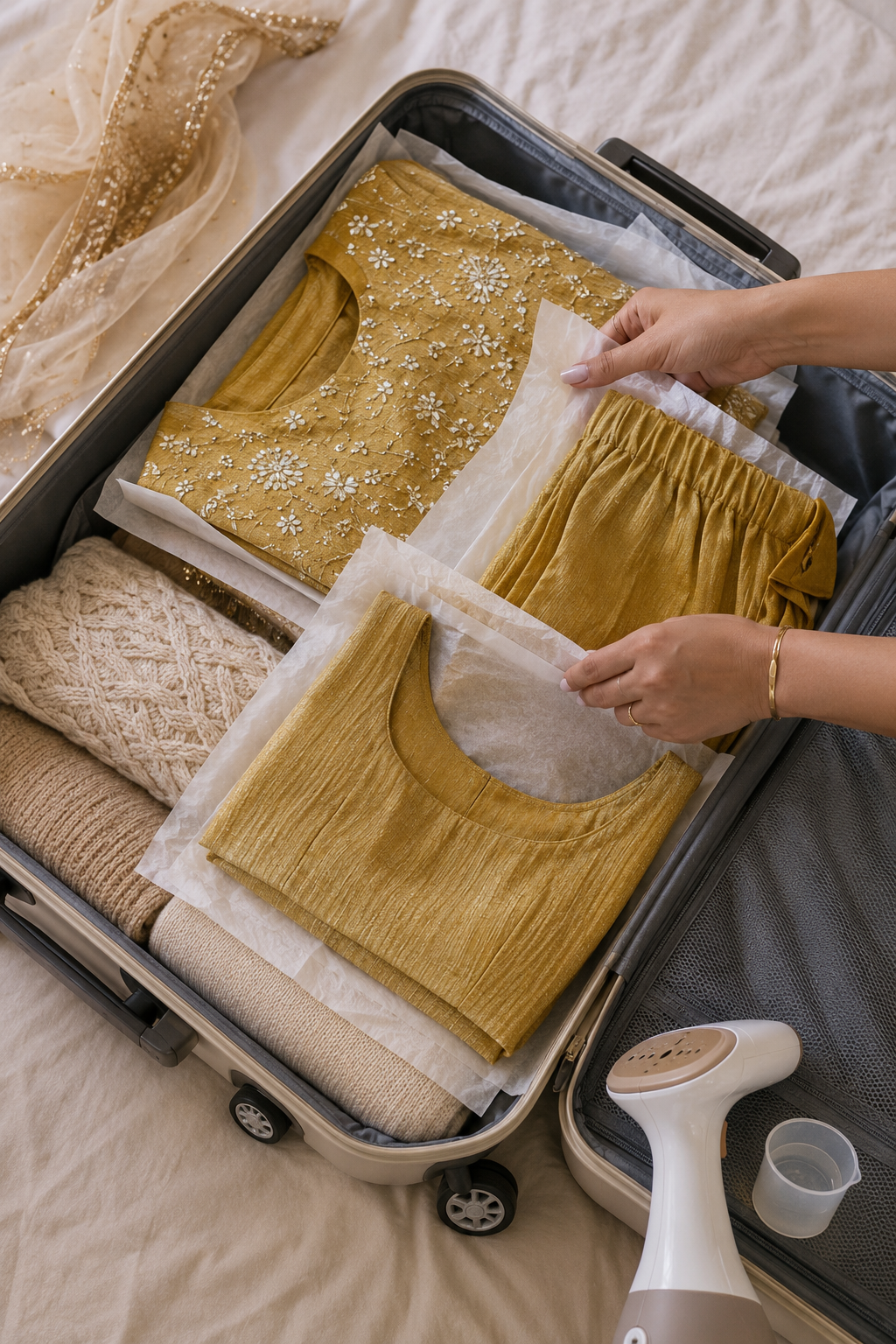
When traveling with your lehenga, pack it safely so that it does not wrinkle, so that the embroidery isn’t crushed, and creases aren’t set during travel. When packing your lehenga, layer heavier clothing items at the base of your luggage and lay the lehenga flat on top of them so that it doesn’t bear the full weight of the rest of the luggage. Also, slip tissue papers or a clean piece of cotton cloth between each fold so that it protects the beadwork and prevents the embroidery from rubbing together and eventually catching and pulling apart. One last tip: if you’re hoping to wear your designer lehenga straight off the plane, make sure you’ll have an iron or steamer waiting at your destination.
How to Care for Heavy Embroidery and Delicate Lehenga Fabrics
Heavy embroidery needs gentle handling. Fabrics like silk, velvet, net, and organza are far more delicate than your regular everyday wear; sequins, beads, stones, and mirror work are all at risk of snagging, popping off, or scratching due to rough handling and rubbing up against zippers. Zardozi and other heavy work can bend, flatten, or come loose when a lehenga is folded hard or pulled around, so move it slowly and let your hands carry its weight. Treat these pieces like they’re meant to last, and they will, ready for the next wedding and the one after that.