

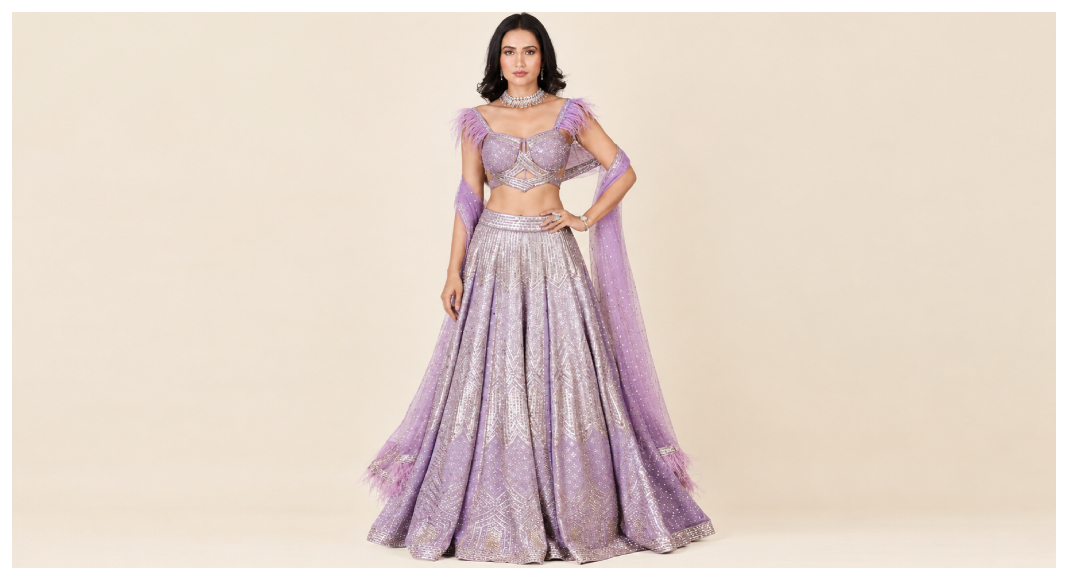
Are you planning your next wedding attire? Well, the intricate details of the styling should be carefully considered, especially for a fitted corset silhouette. At mirraw, we offer corset-style outfits in different fabrics, colors and styles that complete the modern Indian wedding. The corset lehenga is a popular choice offering the perfect blend of a well-defined waist and a contemporary flair without losing the traditional aesthetic with its trailing skirt.
But your skirt, dupatta, jewelry, hairstyle, complementing shoes all must blend together to complement the corset. You must also change the fabric and color depending on the event, be it a ceremony, sangeet or a reception. But, to make it simpler for you, here are practical styling tips to help you pull the whole wedding look together.
How to Style a Corset Lehenga for a Modern Indian Wedding
A proper corset is the base of the design; however, the way you can style it is also essential. Check out these specially curated styling tips below to balance, colors, materials, accessories, and comfort.
1. Choose a Silhouette That Balances the Corset
A corset with a lehenga is a perfect choice for a modern Indian wedding because the silhouette of the skirt balances the corset. However, you can also go for a circular or flared design to create a nice contrast and make your waist stand out. Meanwhile, pick a simple skirt if you decide to go for a corset with outstanding embroidery or any other intricate details. Lastly, ensure that the volume of the skirt is suitable for the overall silhouette of the corset before you add any jewelry or other accessories.

2. Select Fabric Based on the Wedding Setting
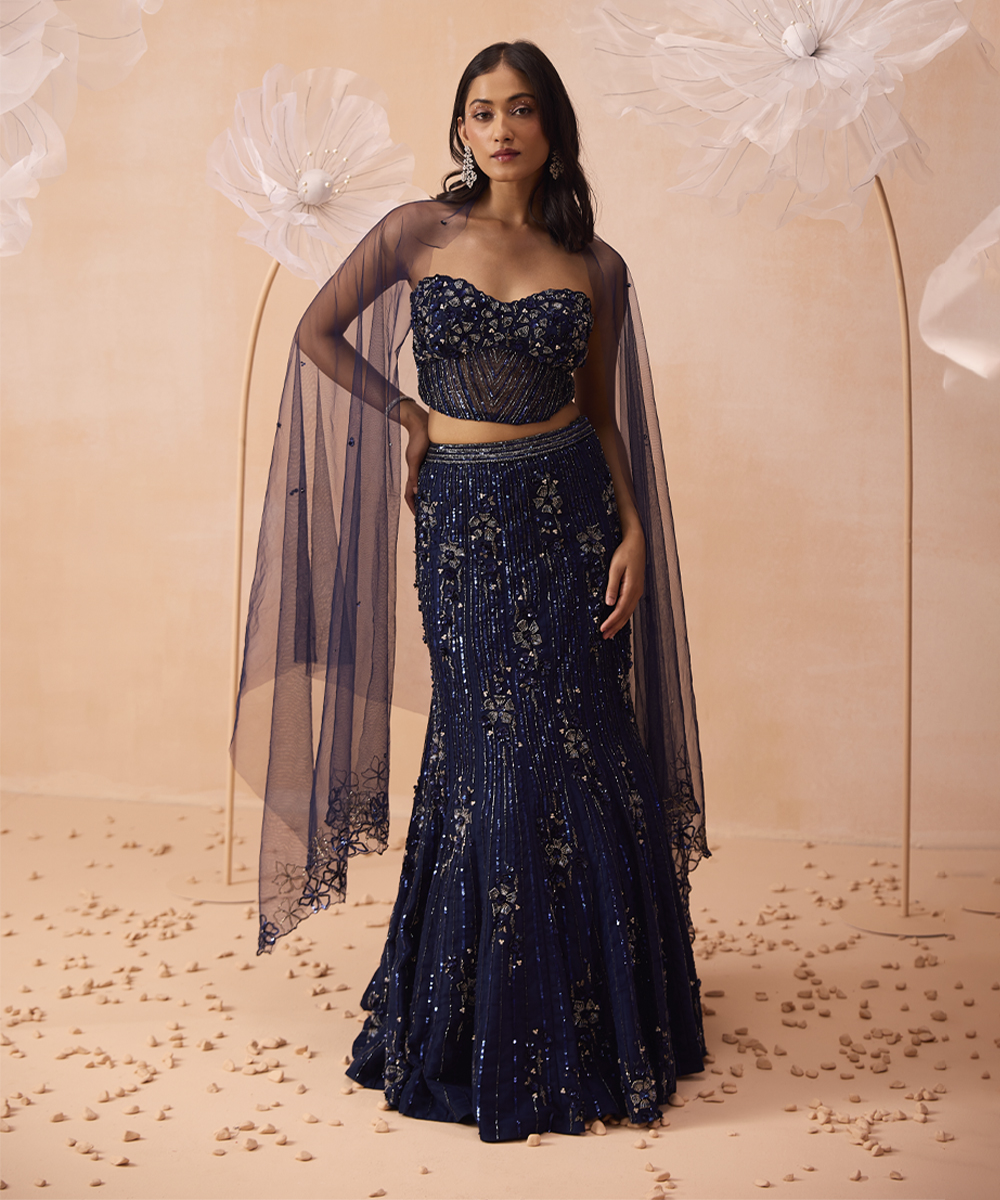
Fabric makes a difference to the way your lehenga dress appears, moves, and feels during the celebration. A corset lehenga setin silkis used for formal ceremonies and is embellished with zari, embroidery, or other heavier surface detailing. An organza lehenga adds a little bulk to the lehenga, while maintaining the structure and lightness of the lehenga skirt. For receptions and dance parties, georgette offers more movement. During the colder season, velvet can add more warmth to evening wedding outfits.
3. Use Color to Match the Wedding Function
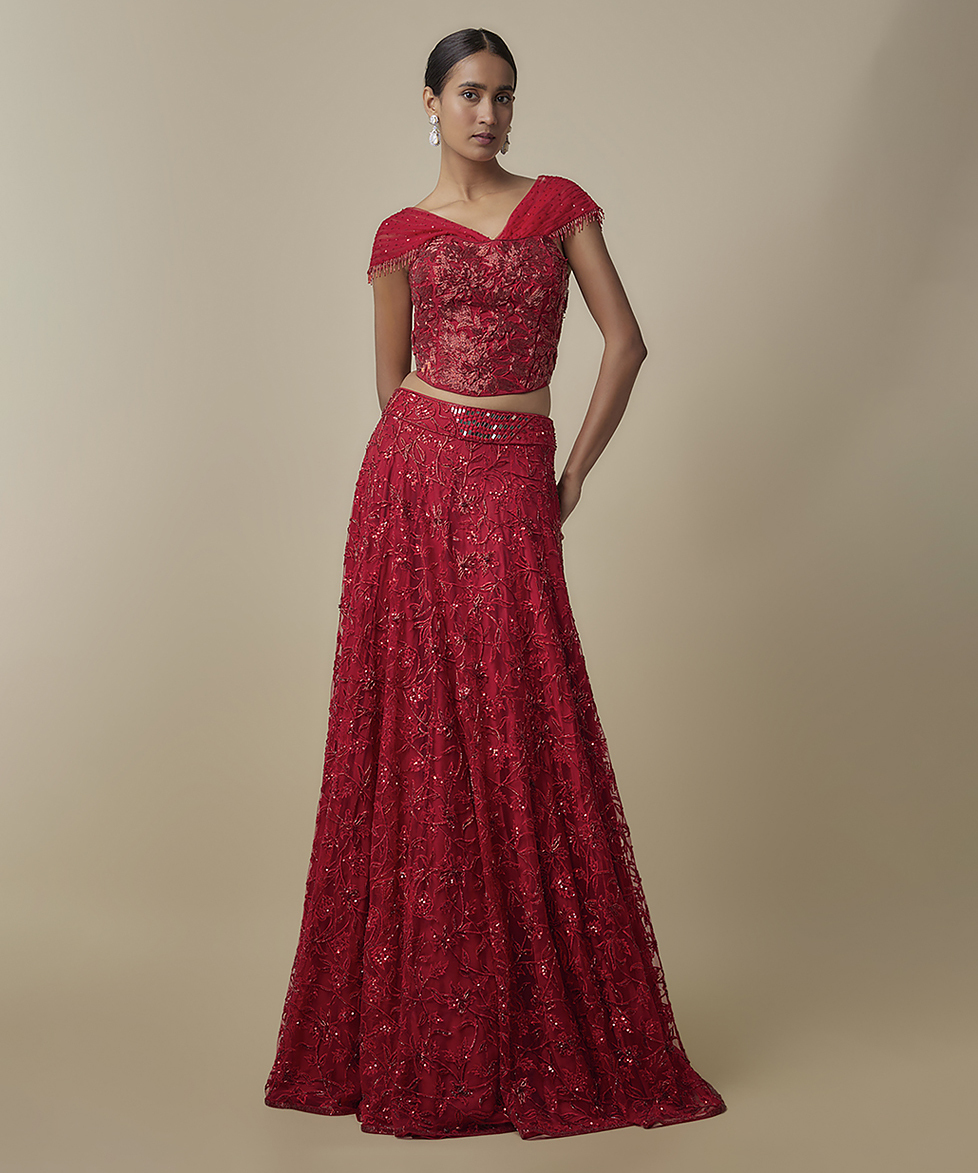
Color is the most important part of your wedding outfit and can help alter the whole look of your outfit. A red lehenga with a corset is ideally suited for traditional occasions such as weddings and other significant events, complementing the gold embroidery and traditional jewelry. For formal weddings, there are more options available with maroon, wine, and emerald green. Sangeet dressing can get more vibrant with purple, fuchsia, royal blue, and mustard colors. For contemporary evening receptions, you can wear champagne gold, navy, and metallic shades.

4. Let Your Dupatta Frame the Bodice
A structured neckline deserves visibility, so avoid covering the entire bodice with heavy draping. A one-shoulder drape can keep the corset visible while adding traditional detail to your outfit. Corset with lehenga styling also gives you room to experiment with different dupatta placements without hiding the structured bodice. A lighter dupatta suits heavily embellished bodices without creating excessive visual weight. For traditional dressing, consider adding another dupatta while keeping the main neckline clearly visible.
5. Match Jewelry with Your Neckline
Your neckline should guide how you select jewelry for the complete outfit. A corset blouse for lehenga with an open neckline can pair beautifully with statement earrings. Jhumkas or chandbalis add traditional detail without requiring several heavy jewelry pieces together. If your earrings are elaborate, choose a simpler necklace around the neckline. Heavier bridal jewelry can suit richly embroidered outfits during formal wedding ceremonies.


6. Choose a Hairstyle That Keeps the Neckline Visible
Your hairstyle can change how clearly the corset neckline appears during the celebration. A sleek bun keeps attention around your face while leaving detailed shoulder work visible. A low bun offers a softer finish without covering important neckline details. Braids can suit sangeet dressing while providing practical support during dancing. Loose waves can work well for receptions with contemporary jewelry and simpler embellishment.
7. Complete the Outfit with Practical Footwear
Your footwear should complement the outfit while supporting movement throughout the wedding celebration. Heels can work with longer skirts when you want a more defined overall proportion. Wedges provide greater support during events involving extended standing or frequent movement. Traditional juttis can complement colorful outfits during daytime ceremonies and festive gatherings. Check your skirt length before choosing footwear, especially with a fitted corset top lehenga.
8. Check the Corset Fit Before the Wedding
A fitted bodice needs accurate measurements because comfort depends heavily on the correct fit. Check your bust, waist, and hip measurements against the seller’s size chart. The bodice should feel secure without restricting breathing, sitting, or natural arm movement. Alterations can sometimes improve the fit when sufficient seam allowance remains available. Check the connection between your corset blouse and lehenga before the final fitting. A corset style lehenga also needs the waistline and skirt to sit cleanly together.
Conclusion
A modern Indian wedding outfit can feel current without losing its traditional character. Start with the silhouette, then let your event guide the fabric, color, and accessories. Give equal attention to comfort because weddings often involve several hours of movement and celebration. A well-fitted lehenga choli can look polished with fewer, better-chosen details. If you are selecting your outfit for a wedding celebration, consider how each element works together before adding anything extra. A wedding lehenga should ultimately feel like something you can wear confidently throughout the occasion.