

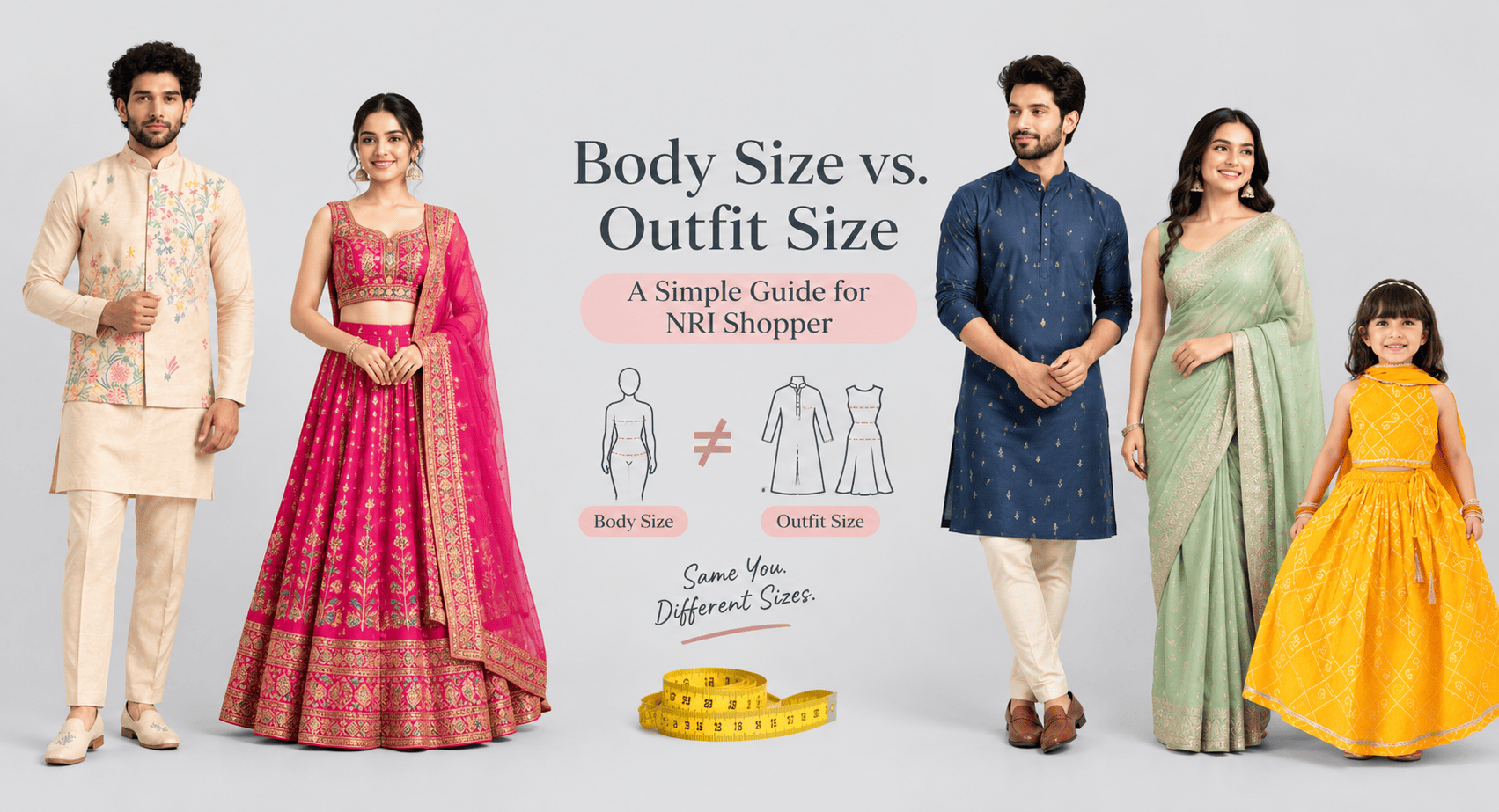
Online shopping opens up brand-new avenues in terms of a wide product selection, easy price comparison, and convenience. However, shopping for clothes online also comes with its own challenges. Perhaps the most important of these is finding the right clothing size. Since you cannot physically try on clothes and see if they fit you, you have to rely on an Indian clothing size chart. This can be confusing as well as sometimes your body size and outfit size don’t match. This is where taking accurate measurements and knowing how to read the size chart comes into play. In this guide, we will list some easy tips for comparing the body sizes for men and women to the outfit size and help you always find the right fit.
Body Size Vs. Outfit Size: What’s The Difference
Body size and outfit size may sound similar, but they are two distinct things. Your body size is based on your actual measurements, while the outfit size tells you which garment may fit you the best. Understanding the difference between them can help make your shopping experience smoother, especially for NRI shoppers.
What is Body Size?
Body size refers to your body’s measurements, usually including bust, waist, hips, and shoulder width for women. For men, the measurements comprise chest, arm length, height, and waist. To measure yourself, take a flexible measuring tape and keep it snug without pulling it too tight. Measure around the fullest part of your bust, hips, natural waist, and across your shoulders. Your measurements are often a more reliable starting point than the size you usually wear.
What is Outfit Size?
Outfit size is the size label assigned to a garment, such as XS, S, M, L, XL, and so on. It gives you a point of reference for choosing clothing but doesn’t guarantee a perfect fit. The actual dimensions of a garment can differ between brands. The right outfit size depends on several factors, including the garment’s cut, fabric, design, and intended fit. A structured saree blouse, a flowing Anarkali, or a fitted Sherwani will not necessarily follow the same sizing rules.
How to Measure Yourself For Indian Ethnic Wear For Women


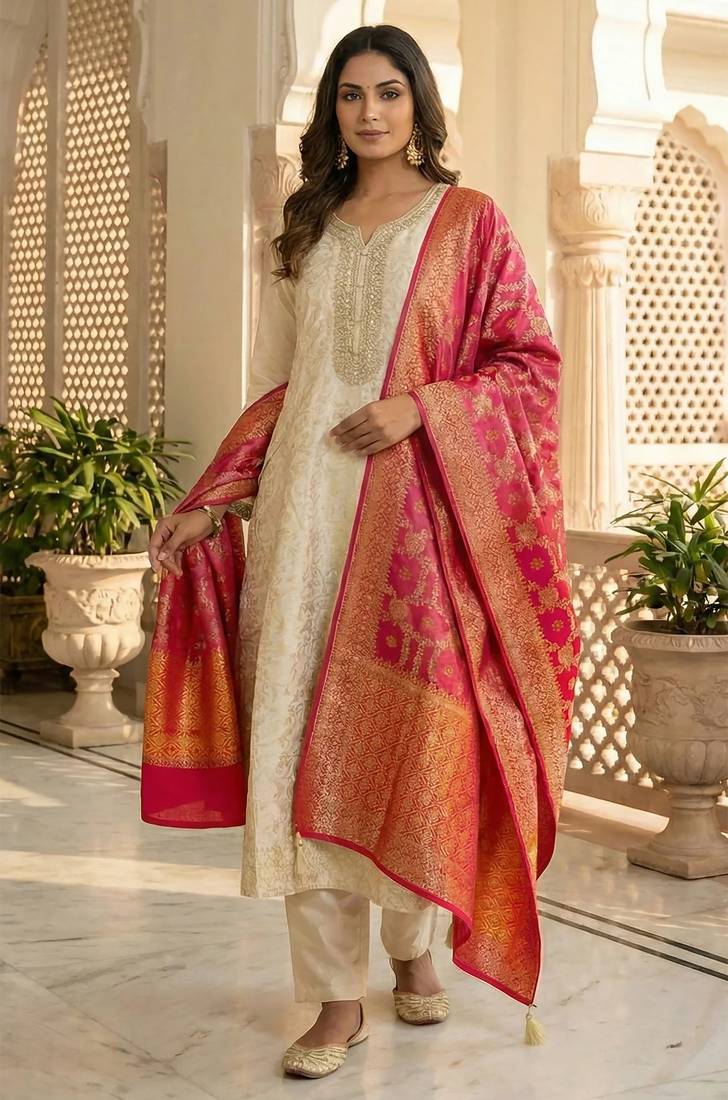
- Bust Measurement: Wrap the measuring tape around the fullest part of your bust. Make sure the tape is neither too tight nor too loose. This measurement is particularly useful when choosing saree blouses, fitted kurtas, and salwar suits.
- Waist Measurement: Measure around your natural waist, above your belly button. Keep the tape snug without pulling your stomach in. For lehengas, skirts, and other garments with a defined waistband, also check where the garment is intended to sit, as it may differ from your natural waist.
- Hip Measurements: Stand with your feet together and wrap the measuring tape around the fullest part of your hips and seat. Keep the tape level all the way around without compressing your body. Hip measurements are useful when selecting fitted kurtas, lehenga skirts, palazzo pants, and other outfits that need enough room around the lower body.
How To Find Your Measurements For Men’s Ethnic Wear

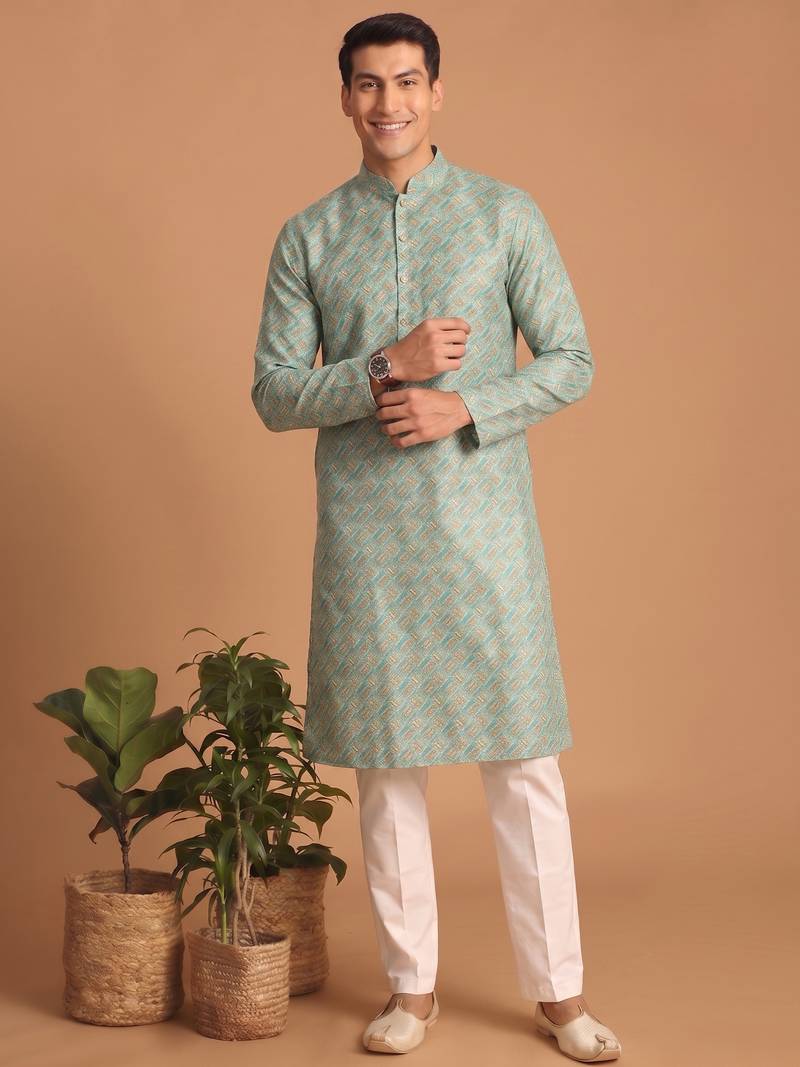

- Chest Measurement: Wrap the measurement tape around the fullest part of your chest, passing it under your armpits and across your shoulder blades. Keep the tape level around your body, and breathe naturally while measuring. Chest measurements are particularly important when choosing kurtas, sherwanis, waistcoats, and Nehru jackets.
- Waist Measurement: Measure around your natural waist, or where the garment’s waistband is designed to sit. Keep your stomach relaxed and the tape comfortably snug. This measurement is key when choosing fitted kurtas, sherwanis, trousers, churidars, and other traditional bottoms.
- Shoulder Measurement: Measure across your upper back from the outer edge of one shoulder to the other. Keep your shoulders relaxed and your back straight. This measurement is particularly important for structured garments such as Sherwanis, Nehru jackets, and tailored kurtas.
Understanding the difference between body size and outfit size makes shopping for Indian ethnic wear online easier and helps you choose clothes that fit you comfortably. Always check the product-specific size chart and measurements before placing an order for a confident shopping experience.