

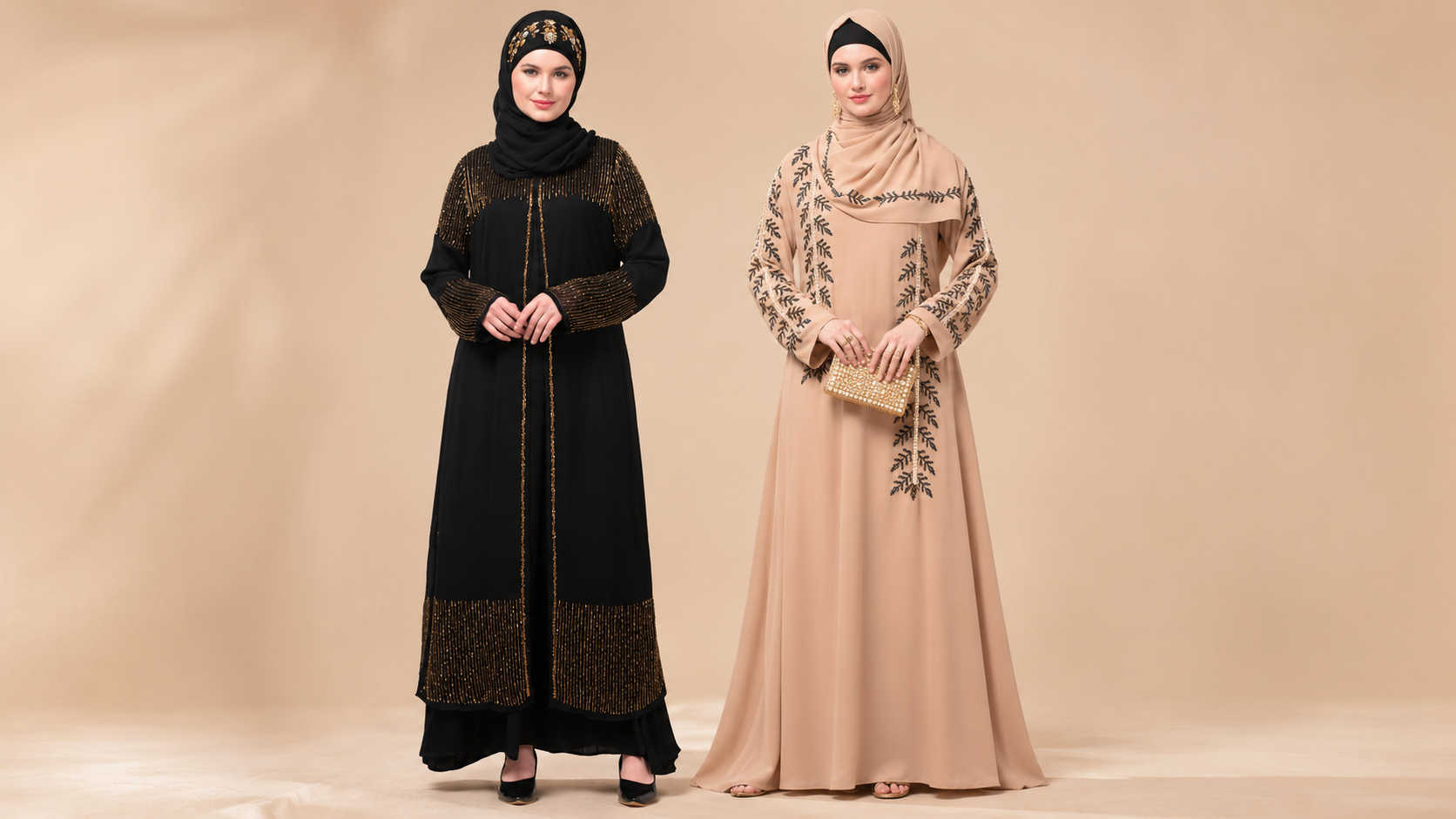
A simple abaya can look beautifully wedding-ready with the right hijab, a few festive details, and accessories that suit each function. Whether you are attending a mehndi, a nikah, or a walima dinner, small changes can take your everyday abaya from plain to polished. For the bride, close family, or the grandest event of the week, a wedding abaya with zari or stone work is often the easier choice. The key is to know what each function calls for.
Match Your Abaya to Each Wedding Function
A South Asian Muslim wedding usually runs across several days, and every function has its own mood. The mehndi or haldi night is bright and relaxed, so pair your abaya dress with a yellow, green, or fuchsia hijab. If you are getting henna, pin back wide sleeves so it does not stain the fabric. The nikah calls for a more graceful, understated look, and soft pastels with subtle embroidery suit it well. Save your most festive abaya styling for the baraat and walima, the dressiest events of the wedding.

Avoid the Bride’s Colors at the Wedding
Red and deep maroon are traditionally the bride’s colors at many South Asian weddings, so guests usually avoid them. Some families also avoid all-black or all-white outfits at ceremonies. A black abaya is still widely worn at weddings, but a jewel-toned hijab, a gold belt, or colored embroidery breaks up the black. Check the invitation, since many couples share a color theme for each function.

Swap Your Everyday Hijab for a Dressier One
Your hijab frames your face in every wedding photo, so it makes the biggest difference to your abaya. Trade a daily cotton hijab for a crinkle crepe style with threadwork along the edges. For evening functions, a diamond-studded party wear hijab adds a soft sparkle. Wedding hijabs with handwork in beige, purple, or grey work with most abaya colors. A tonal hijab looks sleek, while a contrast shade adds instant color.

Add a Belt or a Festive Inner Layer
A belt with zari, pearls, or metallic detailing is the simplest way to shape a straight abaya for a wedding. Wear it at the natural waist for a neat, tailored finish. If your abaya opens at the front, wear it over an embroidered or sequinned inner dress in a jewel tone. The detailing peeks through as you walk and makes even a plain black abaya look festive. Shrug-style abayas that come with a matching belt give you the same layered effect in a single piece.

Keep Jewelry, Shoes, and Bags Balanced
Choose one statement piece and let it lead the outfit. A stack of bangles at the cuff or a bold cocktail ring works well, since most hijab styles cover the ears and neck. Block heels, juttis, or embroidered khussas keep you comfortable through long receptions. Try your abaya with your wedding shoes, since higher heels can lift the hem above the ankle. Carry a metallic clutch or an embroidered potli instead of your everyday handbag. For winter weddings abroad, a long tailored coat over your abaya keeps you warm on the drive without hiding your outfit at the venue. If you are flying home for the wedding, lightweight nida or Kashibo abayas are easy to pack and maintain.

Know When a Wedding Abaya Is the Better Choice
If you are the bride, a close family member, or dressing for the baraat, a fancy abaya made for the wedding saves time on styling. Mirraw’s party wear and wedding abayas include embroidered abaya designs in Kashibo fabric. You will also find georgette kaftan abayas with gold and silver zari work and flowing cape sleeves. Brides who prefer a modest nikah look can choose a bridal abaya in white georgette with zari and stone work. If you are ordering an abaya online from abroad, give yourself three to four weeks and check the size chart before you buy.

The Takeaway
A simple abaya can carry you through an entire wedding week with a few smart swaps. Dress up the pieces you already own for the mehndi and nikah, and save a dressier wedding abaya for the baraat or walima. Good abaya fashion is about balance, so let one detail take the spotlight at each function.