

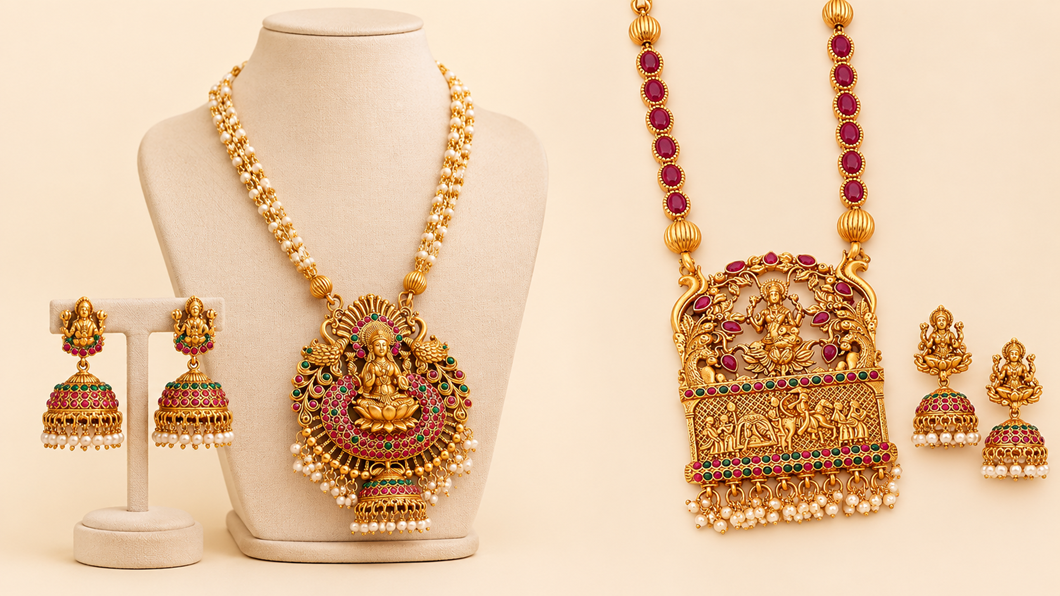
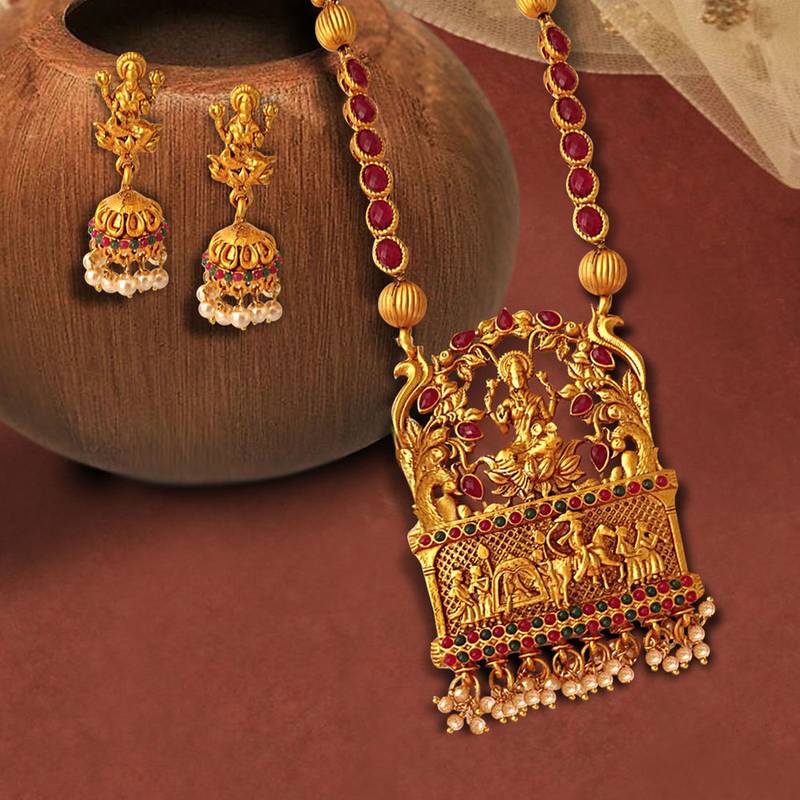
South Indian jewellery is a traditional ornament style you’ll recognise straight away by its deep yellow gold, usually 22-carat, and its temple-inspired designs. Look closely at almost any piece and you’ll find Goddess Lakshmi, a peacock, a lotus or a mango worked into it, each one carrying its own meaning. The range runs from long harams and kasu malai coin necklaces to jhumkas, armlets and waist belts. Nearly all of it was designed around a drape, which is why a haram falls where it does, and why a coin strand is meant to rest just above your saree border. In a lot of families these pieces get handed down, so they carry rather more than their gold value.
However, even the loveliest necklace can look wrong on the wrong saree. A heavy temple set that looks regal on a Kanjivaram will simply flatten a soft cotton handloom. Your fabric, your border, your blouse neckline and the occasion all play a part. This guide will walk you through the best pairing tips so your jewellery and your saree work together.
Know Your South Indian Jewellery Pieces
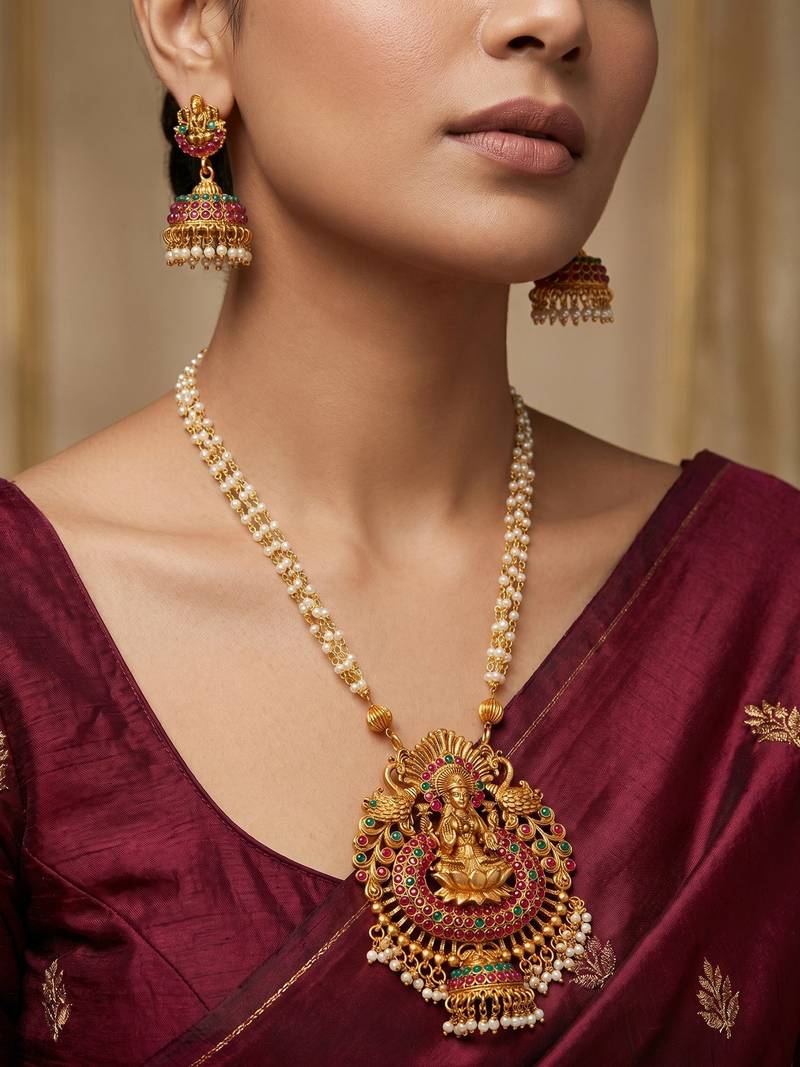
Most south indian traditional jewellery falls into a few classic forms, and once you can name them, shopping gets much easier.
- Haram: The long one, falling to your mid-torso. It’s almost always worn over something shorter, and the gap between the two lengths is the whole point.
- Attigai or Choker: A short, close-fitting neckpiece that rests at the base of the throat. This is the piece that frames your blouse neckline.
- Kasu Malai: The coin necklace. Small gold discs stamped with Goddess Lakshmi, strung together, traditionally worn as a symbol of abundance.
- Jhumkas and Jimikki: Bell-shaped earrings that sway when you move. You can choose from plain gold, pearl-fringed styles, or the ones fitted with ear chains that hook into your hair.
- Vanki: The V-shaped armlet, worn high on the upper arm. You’ll also see it sold as a bajuband.
- Oddiyanam or Vaddanam: A decorative waist belt that holds your pleats and gives the drape a regal touch. Heavier than it looks, so do factor that in for a long function.
- Netti Chutti and Maang Tikka: Forehead ornaments. These finish off a centre-parted braid, and you’ll see them most at weddings.
Mirraw’s collection of South Indian jewelry for women covers most of these, including necklaces, earrings, harams, vaddanam and full bridal sets.
Match Your Jewellery To Your Saree
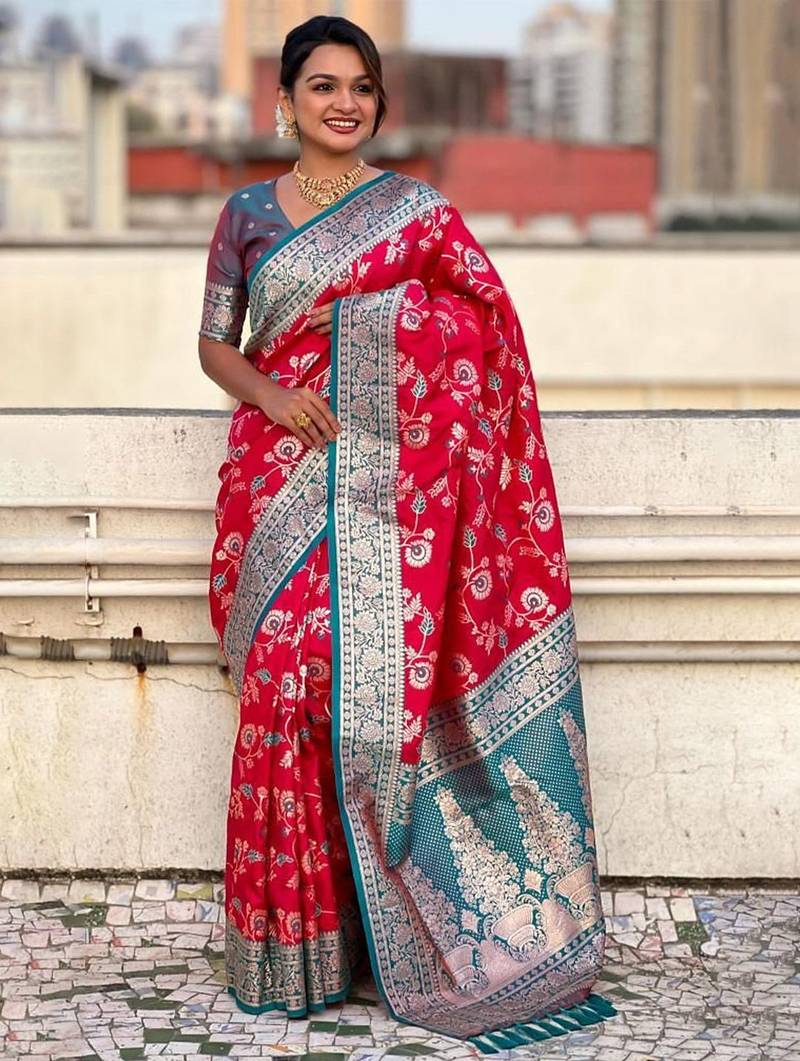
The weave you’re wearing should decide how much gold goes on.
- Kanjivaram and Pattu Silk: These are the sarees that south indian jewellery designs were made for. A Kanchipuram silk saree has body, sheen and a wide zari border, so you can layer without worrying. An attigai at the throat, a Lakshmi haram over the pallu, broad temple jewellery jhumkas, gold bangles. That’s the look. One thing to watch: let the necklace stop where the border begins, because a haram lying across a heavy pallu makes both of them disappear.
- Cotton and Handloom Sarees: Mangalgiri, Gadwal, Chettinad, silk-cotton. These look best when you hold back, since the texture is already doing the work. One antique or oxidised piece is plenty, whether that’s small temple studs, a short kasu malai, or medium jhumkas with a bare neck. On a plain cotton saree with a simple zari border, oxidised silver honestly looks lovelier than gold, though not everyone will agree with me there.
- Organza, Georgette and Chiffon: Light fabrics, light ornaments. Fine chains, pearl-drop temple pendants, small jhumkas. Skip the oddiyanam here altogether, because a metal belt cuts a hard line across soft fabric and pulls the fall out of shape. On an organza saree, let your earrings do the talking.
- Bridal Sarees: South indian bridal jewellery is meant to be heavy, and your wedding is the one day nobody’s going to tell you it’s too much. The order usually runs choker, then a mid-length kasu malai, then a long haram, finished with vanki, oddiyanam, kolusu and a jadanagam down the plait. With a bridal saree that layering is expected, and a ready-made bridal set saves you the trouble, because the lengths come already graded to sit apart.
Choose Your Necklace According To Your Neckline
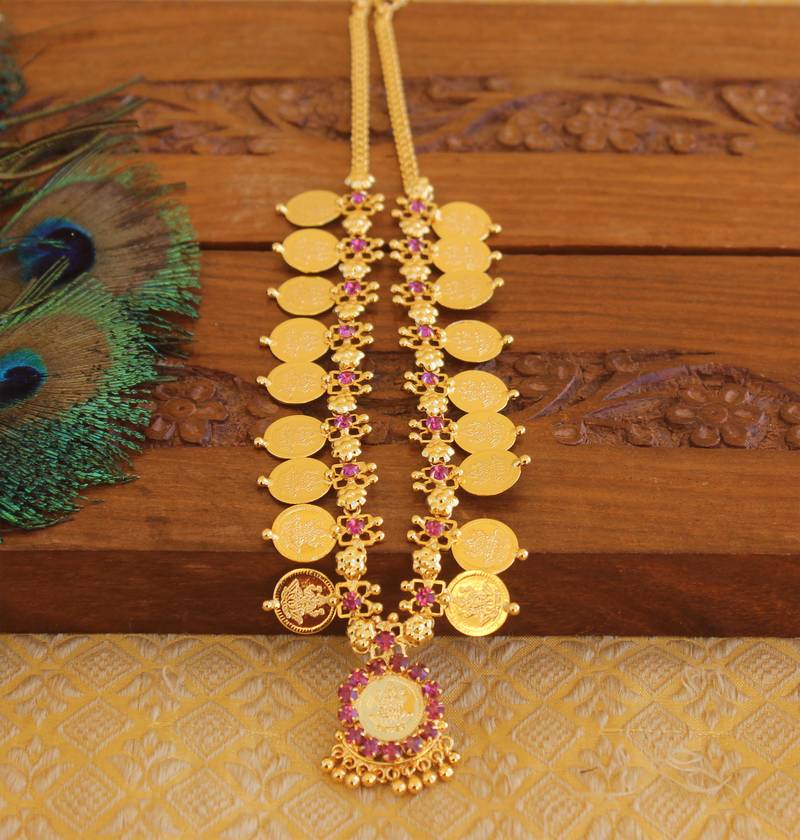
Which necklace actually works? Your blouse neckline decides more of that than the saree does.
- Deep or V-Neck: A choker with one longer chain fills the space without crowding it.
- Boat Neck or High Neck: Leave the choker out. A haram worn over the blouse looks far better.
- Round Neck: A single mid-length south indian jewellery set sits cleanly just below the neckline.
- Backless or Halter: Keep the neck light and let the jhumkas, vanki and jadanagam take over.
Whenever you layer, leave about two fingers of space between the strands. Necklaces that touch just look piled on.
Avoid These Common Styling Mistakes
- A heavy oddiyanam on chiffon or georgette. It drags the fall down and spoils the drape you paid for.
- Bright polished gold on a pastel handloom. It reads harsh. Antique and oxidised south indian jewelry designs suit those weaves far better.
- A big choker and heavy chandbalis at once, especially when your saree already has a busy border. Pick one hero piece and build around it.
That said, none of this is a rule you can’t break. Temple jewellery has been worn with gowns and sarees alike for years now, and dancers have been wearing gold-polished versions on stage for far longer. The right jewellery takes a saree look from nice to unforgettable, so whether you’re dressing for a wedding, a Pongal lunch or a quiet temple visit, pick what suits your weave and feels like you.