

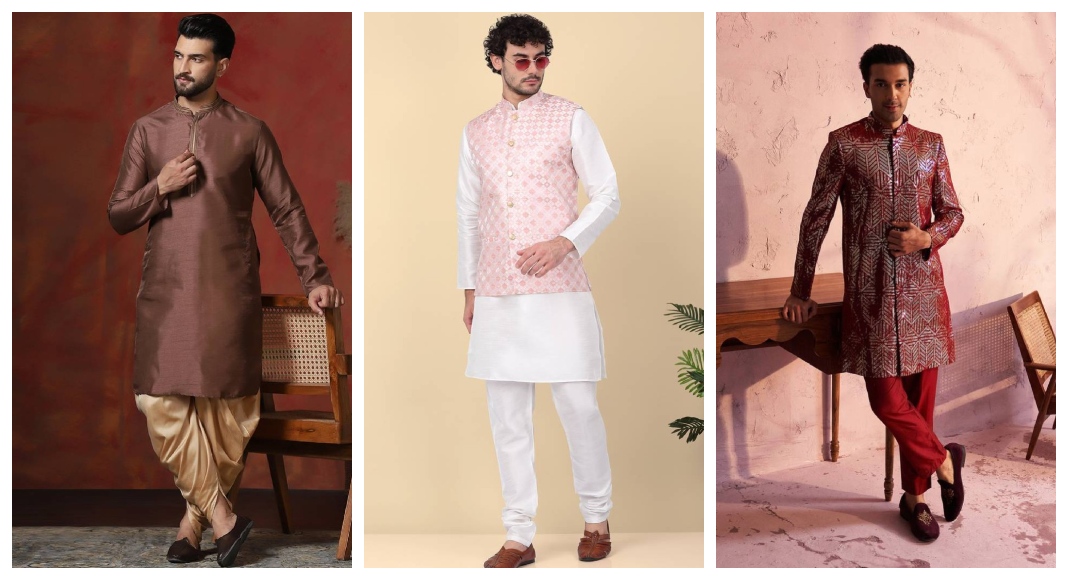
Long before Indian fashion took over global events and runways, Indian traditional wear for men quietly but grandly occupied space in the wardrobes of the common man and rulers back in the homeland. How Indian men’s clothing has influenced fashion globally is not a single narrative. It is a series of events that put this country and its fashion on the world map.
The Indian traditional wear for men has always had a strong cultural identity. It has always been all about handwoven fabrics, Indian crafts and a sense of royal elegance with a lot of comfort. In India, men have embraced a range of outfits from relaxed silhouettes like kurta and dhoti to immaculate royal ones, like sherwani and Jodhpuris. Over time, Indian textiles, embroidery techniques, layering styles and flowing cuts have crossed the borders and gone global through trade, war, cinema and cultural exchange. As a result, Indian men’s fashion now has a strong presence in runway fashion, fusion wear, resort wear and even luxury couture.
Let’s explore some traditional Indian men’s clothing that influenced global fashion.
The Nehru Jacket and the Western Love Affair with It
One of the most recognizable Indian outfits for men is the Nehru jacket, a hip-length coat with a mandarin collar. Would you believe it if we told you that The Beatles wore it, and that Pierre Cardin did versions of it, too? It has been a rage: on album covers, in films and on the backs of many Westerners.
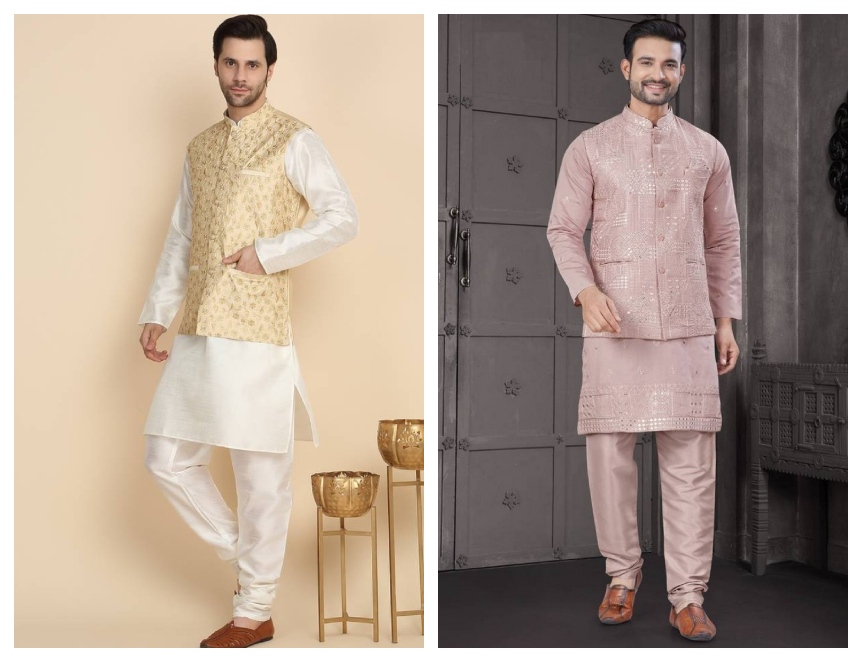
The Nehru jacket is actually a derivative of the Achkan and the Sherwani, formal Indian coats with deep roots in Mughal court dress. Today, we see it across formal and casual wear outfits. In India, we often see men styling it with all sorts of kurtas, long and short. And as it takes over a global stage, it’s often styled with a shirt and trousers, with a smart contrasting pocket square to complete the look.
The Kurta and Its Path to Hippie Culture
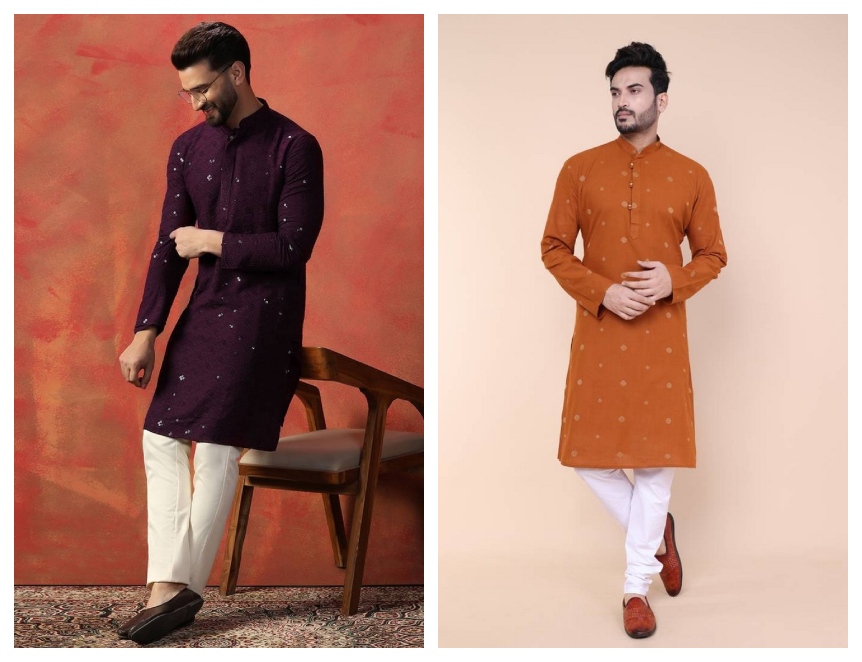
Indian spirituality, music, and aesthetics have always been a huge rage in the West. In the 1960s and 70s, the common Indian attire for men, the men’s kurta got a free ride and became popular there. Western men wore loose, collarless Indian kurtas as a relaxed version of the formal shirt. This statement slowly became part of mainstream Western casual fashion. Now, we see several variations of it as staples in wardrobes globally. Think linen shirts, beach tunics, and relaxed-fit overshirts. Loose, breathable, with little or no collar, the DNA of the men’s kurta can be spotted in a substantial part of today’s menswear casual wear.
The Bandhgala and Its Runway Revival
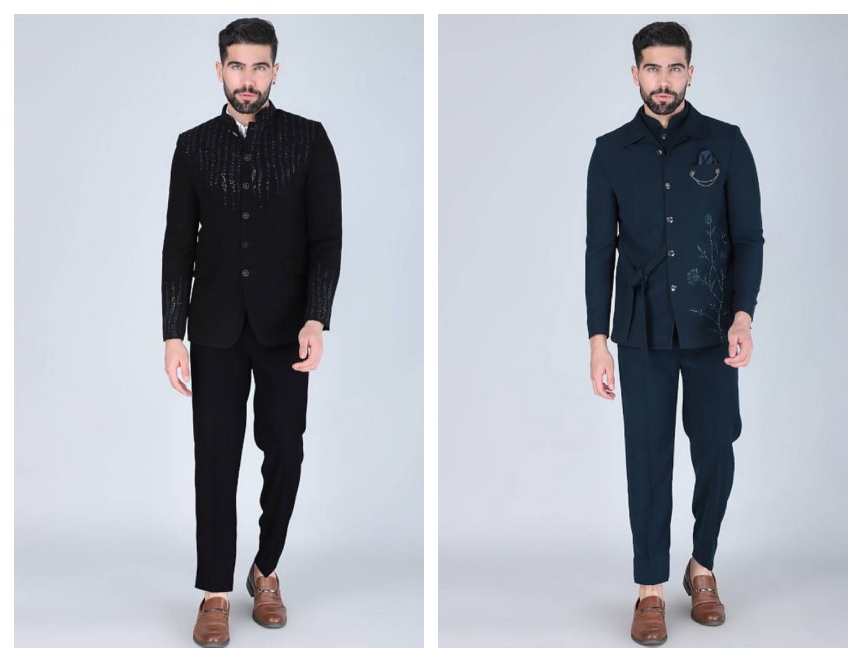
The Bandhgala or the Jodhpuri suit is a formal jacket worn across Indian states with regional variations. The bandhgala is often fitted around the torso; it has structured shoulders and a closed collar. Over the last two decades, designers such as Tom Ford, Ralph Lauren and several European houses have referenced the formal jacket with a structured closed collar in their collections. The Bandhgala or Jodhpuri suit is a lovely formal alternative to the Western suit jacket that designers have found repeatedly appealing.
Jodhpur Trousers: The World’s Most Literally Named Fashion Export
Jodhpur trousers have one of the most well-documented origin stories in Indian fashion. Jodhpurs are tight from the knee down and flared at the hip. The Maharajas of Jodhpur in Rajasthan often wore these trousers during horse riding. In 1987, Maharaja Pratap Singh visited England for Queen Victoria’s Diamond Jubilee. There, he wore these pants during polo, and the fit and practical nature of the design appealed to the British polo players, and they adopted it almost immediately.
Since then, Jodhpurs have become a staple of equestrian, fashion and military-inspired collections and have been a recurring feature in mainstream Western fashion.
The Dhoti and Its High-Fashion Translation
A dhoti has a long standing in Indian traditional wear for men. It is an unstitched fabric that is draped around the lower body. Over the years, it has inspired a host of high-fashion interpretations. When we speak of luxury menswear, we can see many unique versions of the dhoti. Think of draped trousers, asymmetric wrapped skirts on men and deconstructed bottom wear. They’re all nothing but reimagined dhoti.
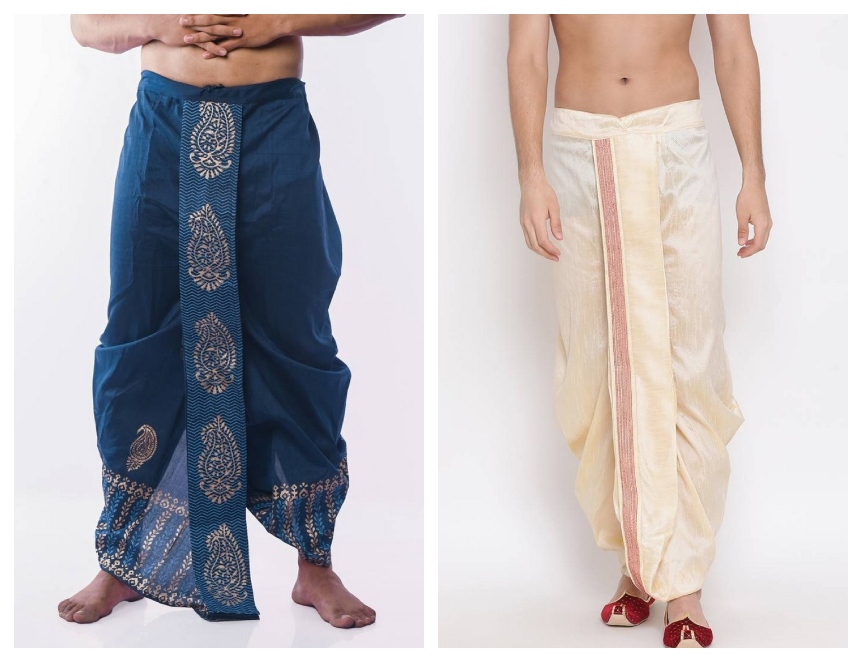
Basically, anything that isn’t a conventional trouser but has layers or a flowy silhouette owes its existence to the dhoti kurta and its regional equivalents across the Indian subcontinent.
What This Actually Means
The rise of Indian outfits for men in the global fashion arena is not just a matter of chance but has real substantial meaning. The textile traditions, silhouette philosophy and even craft of Indian traditional wear for men addressed many problems of the western tailoring, such as breathability in heat, comfortable volume in formal wear and non-restrictive movement in everyday clothing. Global fashion is evolving at warp speed, and there’s a lot of credit that Indian outfits for men deserve. When you know where these influences really came from, fashion becomes much more interesting.