

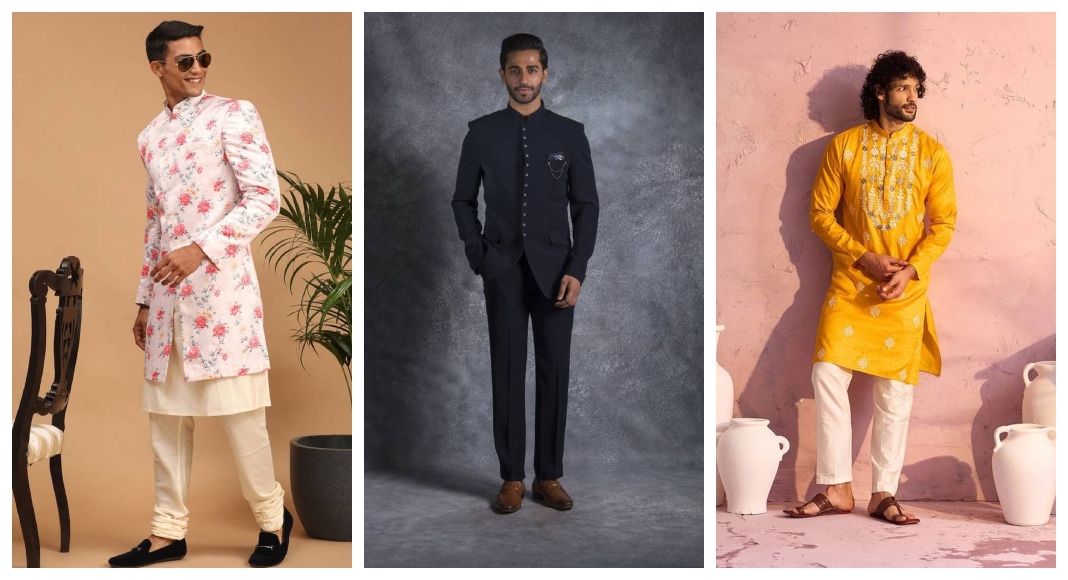
In India, festive dressing is much more than simply wearing nice clothes. It’s a way you announce your arrival, express your personality, and make a statement of pride, all at once. For men, the options of occasion wear are plenty, and each has a unique charm. But still, before every festival, wedding, or ethnic occasion, men end up wondering: what should I wear?
With evolving fashion, the options for Indian outfits for men have increased by leaps and bounds. They have never been so varied, so sophisticated, and so well-curated. There is a look for every occasion, be it a grand wedding, a pooja at home, a festival, or just a simple temple visit.
If you also want to make the best of the different kinds of Indian traditional wear for men, read along and make your pick.
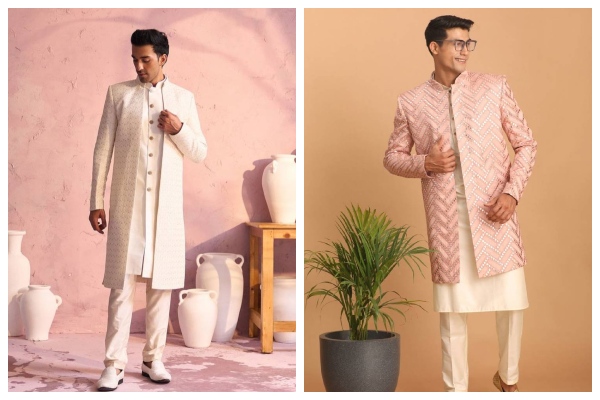
The Regal Sherwani
A sherwani is the most royal of all traditional outfits for men. It’s a long, structured and impeccably tailored outfit and a go-to for weddings. The classic sherwani is cut just below the knee and has a mandarin or closed collar. It is usually worn with a churidar, straight-leg salwars or trousers.
You can choose a sherwani in thick, lustrous fabrics like silk or brocade. And since embroidery is the soul of a great sherwani, you can choose from zari, resham, sequin and threadwork.
Style Tip: Go for a heavily embroidered sherwani with a plain churidar in a tonal shade and avoid matching embroidery on both pieces. Complete the look with embroidered mojaris or pointed juttis and a safa around your head.
Bandhgala Suit
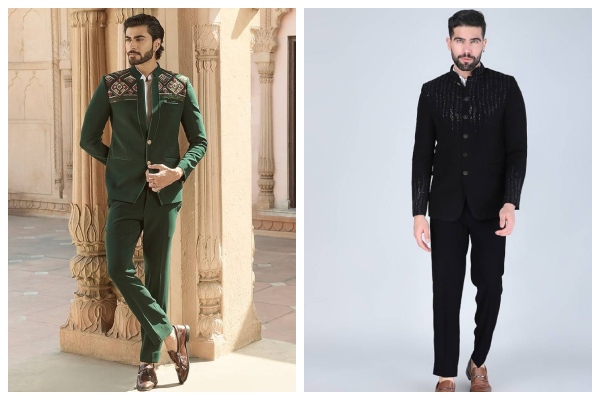
A bandhgala suit is suave but with a touch of practicality that allows it to jump between occasions with ease. The bandhgala or Jodhpuri suit is a formal jacket with a closed Nehru-style collar, worn with matching straight trousers. It is one of the most wearable Indian garments for men to have in their modern wardrobe.
It works beautifully for weddings and black-tie Indian events in silk or velvet. In linen or cotton, it is equally comfortable at a festive lunch, a mehendi or daytime events.
Styling Tip: Solid bandhgala suits in jewel tones, in bottle green, burgundy, and midnight blue, are timelessly elegant. Add a pocket square in a contrasting shade and plain Oxford shoes or ethnic juttis, and voila! You’re ready.
Nehru Jacket
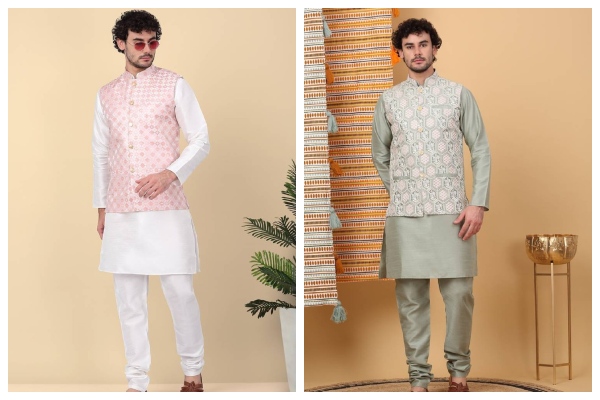
Without at least one Nehru jacket, your festive wear wardrobe is incomplete. Shorter than a sherwani, more relaxed than a bandhgala, the Nehru jacket is the layering piece that is like the blazer of Indian mens clothing. You can wear it over almost anything and instantly appear more put together.
A brocade or jacquard Nehru jacket over a plain cream kurta pyjama is a complete festive look. A more subtle cotton or linen Nehru jacket over a kurta also works well at a puja or a family gathering.
Style Tip: Let the Nehru jacket be the statement piece. Choose it in a rich fabric or with subtle surface embroidery, and keep the kurta underneath simple and solid. Finish the look with loafers or leather sandals and a contrast pocket square.
Kurta Pajama
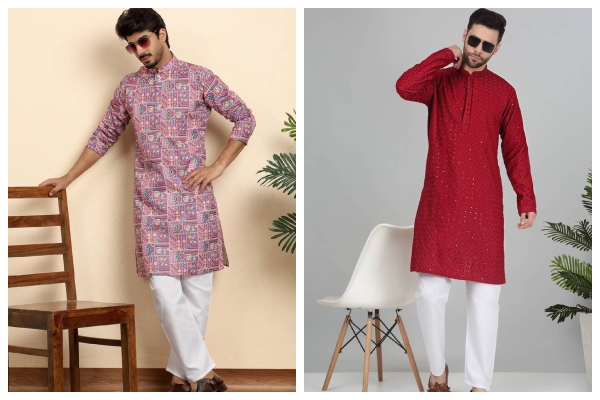
A kurta pajama for men is a staple in Indian festive dressing. It’s comfortable, elegant, infinitely customizable and suitable for almost any occasion. A well-cut mens kurta in a good fabric like chanderi, cotton-silk or linen, paired with a straight or slim-fit pyjama, is a complete, polished look and doesn’t take much effort to get right.
The key decisions are fabric which should be season and occasion-appropriate and fit which should always be tailored and never boxy. And, a little embellishment goes a long way. Thread embroidery at the collar or cuffs is usually enough.
Styling Tip: Add accessories and footwear to make a basic kurta pajama look elevated. A good pair of Kolhapuris or embroidered juttis, a slim watch, and a simple bracelet are all that you need.
Dhoti Kurta
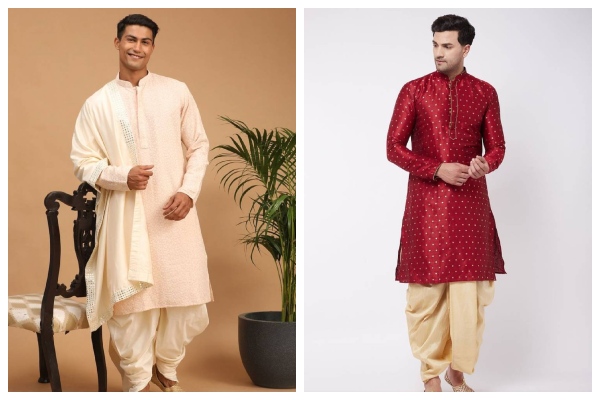
Dhoti kurta is the most striking of all festive ethnic looks. The dhoti is a piece of cloth that is wrapped and folded around the waist and legs. Paired with a kurta, it is a silhouette that is deeply rooted in Indian culture, yet surprisingly fresh.
The dhoti kurta is a staple at South Indian weddings, traditional religious ceremonies and increasingly at contemporary fashion-forward festive events in the North. The trick is in the drape. A loose, untidy dhoti looks sloppy, whereas a well-pressed, neatly tucked dhoti with a fitted kurta for men looks outstanding.
Styling Tip: If you’re new to the dhoti, start with a pre-stitched or concept dhoti – it mimics the drape of a traditional dhoti without having to learn the tuck. Pair it with a collarless or mandarin kurta for a clean, modern interpretation.
The Bottom Line
The best thing about Indian garments for men is that there is literally something for everybody, every occasion and every level of formality. Whatever you wear, wear it well-fitted, wear it with good footwear, and wear it with a lot of confidence since Indian festive dressing is one of the most beautiful expressions of personal style in the world.