

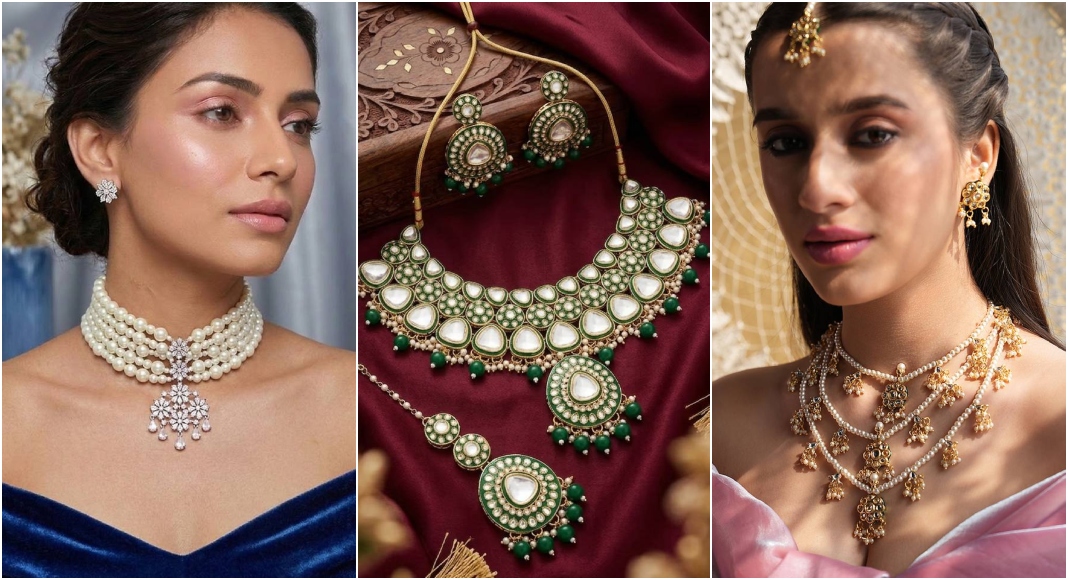
Indian necklaces are not just accessories in your collection of precious jewelry; they are a legacy. Every piece has a story to tell that dates back years and centuries. These necklaces have played a powerful role in Indian dressing for the longest time. They marked identity, belief, and belonging and tied it all together. These necklaces have been a way to express for women since ‘dress to express’ wasn’t even a known phrase. Indian necklaces have long symbolized:
- Status: Through the usage of precious metals, gemstones, and the inclusivity of craftsmanship.
- Marital identity: Some pieces, like the mangalsutra, are specifically worn by married women.
- Regional roots: Every state has something of its own, like the Kolhapuri saaj, a necklace featuring 21 leaves, of Maharashtra.
- Spiritual belief: Many wear double necklaces as sacred symbols or talismans.
From Old World to Modern Charm
Many of the Indian necklace designs are derived from the ancient temple carvings or royal court paintings. The traditional Indian necklaces have evolved with time while retaining their cultural soul. Back in the day, these designs were handcrafted in gold and silver. What motivated these designs were nature, mythology, and divine figures. Though in the modern adaptation of these necklaces, you can see various trendy designs. These versions are a fresh take on this long-held history while having those same motifs reimagined for relevance in modern times.
How Indian Necklaces Differ from Western Styles
The biggest difference between Indian jewelry necklaces and Western ones is the intent. While the Indian necklaces lean more towards culture and heritage, the Western pieces have more of a modern edge to them. The designs that you see in Western necklaces often have that minimalistic approach, whereas the Indian pieces have a larger variety of grand neck pieces derived from cultural references.
Why Indian Necklaces Are Loved Worldwide Today
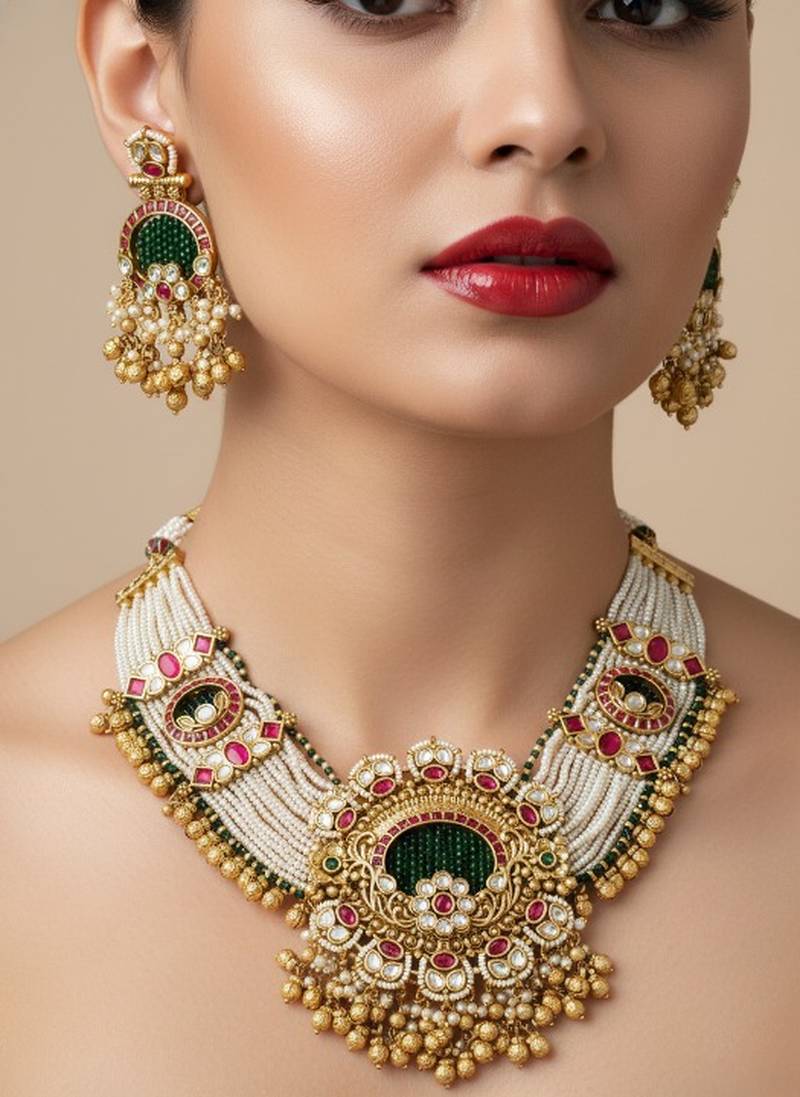
The love for Indian necklaces has gone global due to many reasons. But one of the main reasons behind its worldwide appreciation is its unique craftsmanship and cultural depth. Many fashion lovers all across the world are turning to this jewelry for its handcrafted detailing and timeless beauty. Another great thing about them is that they are super versatile and now even range from simplistic to royal. So you can get an Indian necklace and literally style it with any of your outfits.
The Historical Roots of Indian Necklace Design
Indian necklaces are not at all modern inventions if you see them that way. They are shaped by centuries of culture, belief, and exquisite craftsmanship.
Early Beginnings
The necklaces were worn by women of the Indus Valley civilization. Archaeologists have found many necklaces made from beads, shells, and semi-precious stones from that time. All these designs were linked to protection, identity, and social status.
Spiritual Meaning
Even in the Vedic period, necklaces existed as ritualistic and sacred pieces. This was the time when they were made using gold, threads, and rudraksha elements for the spiritual protection of the wearer. Jewelry, at this time, was a major reflection of people’s spiritual beliefs.
Royal Influence
In the Maurya and Gupta era, necklaces got a whole new identity after being transformed into fine art. Some of the popular necklaces from this time are gold with gemstones, floral motifs, and animal symbols.
Design Evolution Through Influences
- Mughal craftsmanship: In the Mughal times, Indian necklaces got the enamel work, gemstone layering, and all the luxe detailing.
- Temple architecture: Many of these jewelry got inspired by the beautiful architectural designs of Indian temples, especially in the southern part of the country.
- Royal courts: The scale, opulence, and extremely detailed designs of the necklaces were for the royal courts, where grandeur was a major theme.
Materials Used Historically
- Gold and silver
- Pearls and beads
- Rubies, emeralds, and uncut diamonds
How History Shapes Modern Necklace Designs
Historical aesthetics have greatly shaped and influenced the modern Indian necklaces. The temple chokers are a reflection of South Indian heritage, while the Kundan sets perfectly convey the beauty of Mughal artistry with uncut stones and enamel work. The commendable design sensibility that we witness in these necklaces is primarily derived from the rich history of India.
The Most Iconic Types of Traditional Indian Necklaces
Traditional necklaces in India come in many forms, and each of those is associated with royalty and ceremonial dressing. They are all you need for adding depth to your traditional outfits.
1. Long Necklaces
Haar: This is a classic go-to neck piece for Indian woman which appears long and heavy with some royal detailing.
Rani Haar: This one is a more elaborate and heavier version of necklaces, which got its name because it used to be worn mostly by queens.
Open-length necklaces: These come with extra-long strands that fall below the bust and add some drama to your whole outfit.
When and How They Are Worn
All these necklaces are mostly worn by women for grand occasions like weddings, receptions, and ceremonial events. They are often paired with chokers or short necklaces for a layered look.
Outfit Pairings
- Bridal lehengas
- Heavy silk sarees
- Anarkali suits and shararas
2. Short Necklaces
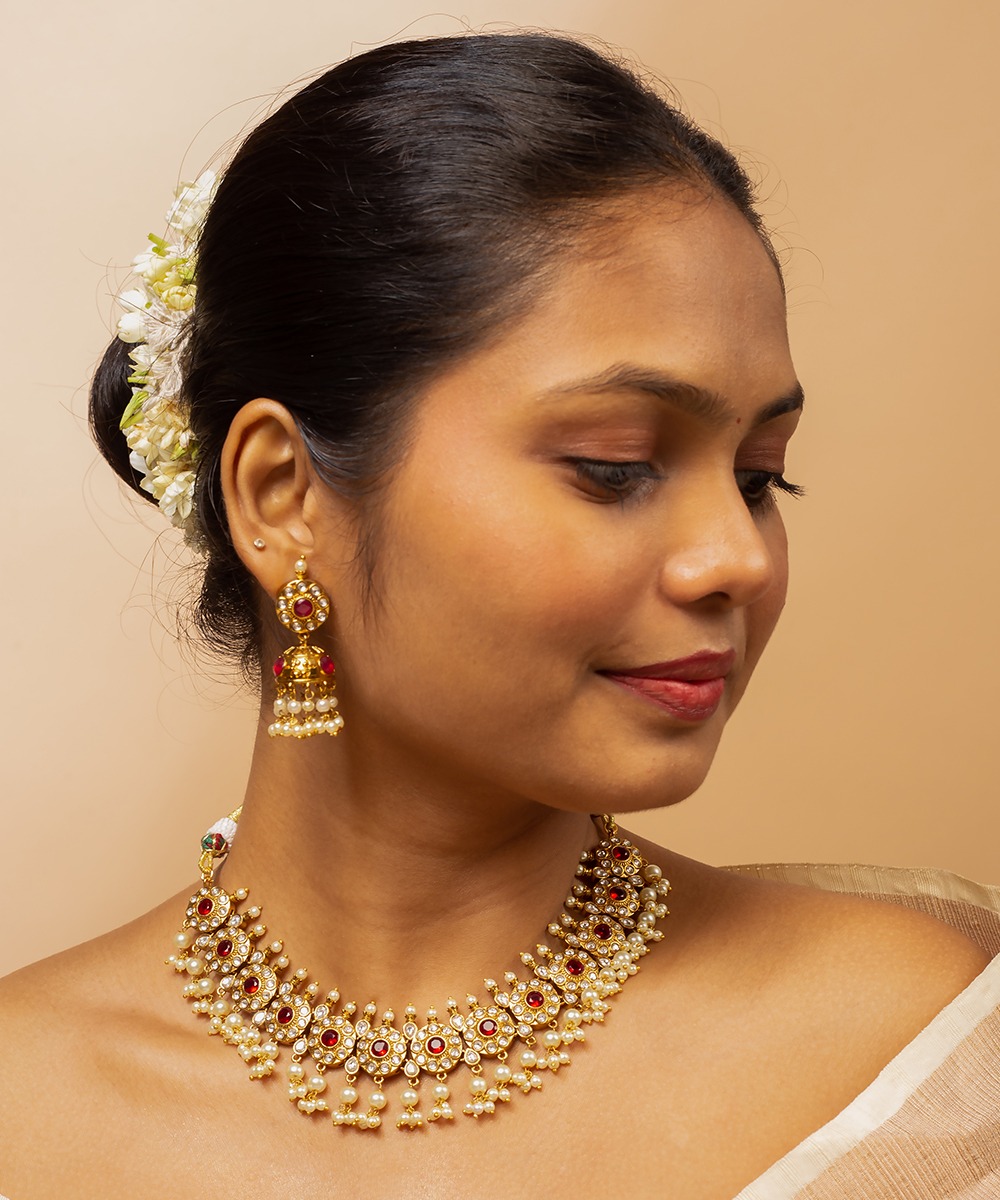
If you would like to frame your face perfectly and beautifully, short necklaces are a great fit for it. They are both traditional as well as modern wardrobe staples that can be styled in many ways.
Popular Types
- Choker necklaces – They hug your neck perfectly and are usually worn high on the neck.
- Collar necklaces – These are slightly wider chokers that come with quite well-structured detailing.
- Princess-length necklaces – These necklaces, as their name suggests, are extremely royal. They fall just below the collarbone.
Modern vs Traditional Usage
- These necklaces, like many others, are traditionally worn with sarees and lehengas.
- They are now being styled with gowns, fusion outfits, and even Western wear.
- If you have lighter chokers, you can also style them for minimal festive looks.
3. Layered Necklaces
Layering is a signature element of Indian bridal jewelry. This is something that creates richness, dimension, and visual balance to your whole look.
Bridal Layering Traditions
- Women have been wearing multiple necklaces for their weddings for a long time.
- This usually is a combination of chokers, rani haar, and sita haar.
Gold and Kundan Layering
- Gold chokers paired with long kundan haars
- Polki and pearl strands added for depth
Styling Rules for Balance
- Make sure to mix and match the lengths and not the heaviness of your necklaces.
- Take one necklace for styling and let it be a focal point.
- Let your neckline shine by avoiding overcrowding.
4. Statement Necklaces
Statement necklaces are all about drama and uniqueness. These pieces are designed solely to stand out.
- Heavy Bridal Necklaces: These include wide chokers with extravagant works of art and layered gold pieces. They are designed to dominate the bridal look.
- Temple-Inspired Designs: These designs have all things anciently beautiful, including the deity motifs, coin detailing, and antique gold finishes.
- Polki and Kundan Statement Pieces: In these necklaces, you can see uncut diamonds and vibrant enamel work. These are a result of Mughal-influenced craftsmanship and work beautifully for grand events.
Craft-Driven Indian Necklaces and Their Signature Techniques
1. Kundan Necklaces
- Origin: They originated in the royal courts of Rajasthan and were later crafted to perfection in the Mughal times.
- Making Technique: Made using uncut gemstones that are later set into a gold foil base using lac, with enamel detailing on the reverse.
- Bridal Importance: It works as a core bridal jewelry style and is also seen as a symbol of luxury, heritage, and grandeur.
- Best Outfits to Style With: Bridal lehengas, silk sarees, anarkalis, and any type of heavily embroidered festive wear.
2. Polki Necklaces

- Difference Between Polki and Kundan: While kundan necklaces are made using gemstones set in gold foil. Polki necklaces are made using uncut diamonds.
- Raw Diamond Setting: The diamonds used in them are unpolished and are directly mounted on gold that gives them a raw effect.
- Royal and Bridal Usage: These were a royal favorite back in times and now are favored for minimalist bridal looks.
3. Meenakari Necklaces
- Enamel Work Origins: The artistry was introduced by the Persians and perfected during the Mughal era.
- Color Symbolism: Red signifies prosperity, green represents harmony, and blue reflects divinity.
- Backside Artistry: Both sides are equally defined, having intricate enamel designs.
4. Temple Necklaces
- Deity Motifs: They feature beautiful art related to gods, goddesses, lotus forms, and sacred symbols.
- South Indian Heritage: They are very much rooted in Tamil, Telugu, and Kannada cultural traditions.
- Gold Weight and Craftsmanship: These are made in heavy gold with great detailing and antique finishes.
5. Filigree Necklaces
- Silver-Based Crafts: Primarily made of silver and lightweight metal alloys.
- Handcrafted Regions: They can be commonly found in Odisha and parts of Western and Central India.
- Cultural Relevance: They represent delicate folk artistry and slow handcrafted traditions.
6. Tribal Necklaces
- Materials Used: Many natural elements, as well as coins, shells, silver, and beads.
- Cultural Identity: Reflect ancestral traditions and indigenous craftsmanship.
- Modern Fashion Adaptation: Now styled with fusion wear and contemporary outfits.
Regional Styles That Define Indian Necklace Design
The geography of India has a huge role to play in shaping necklace styles in all unique ways. Each region has its own signature forms that make it stand out.
1 South Indian Necklace Traditions
- Kasu Mala features coin motifs.
- Manga Malai comes with mango-shaped pendants.
- Addigai chokers are made to be worn closer to the neck.
- Bridal temple sets usually have layered gold elements.
2 North Indian Necklace Aesthetics
- Kundan haars with lovely gemstone detailing.
- Pearl chokers to pair with layered long necklaces.
- Mughal-inspired designs with enamel backs.
3 Maharashtrian Necklace Styles
- Thushi, a tightly strung gold bead choker.
- Kolhapuri Saaj has 21 symbolic pendants.
- Both are traditionally worn by brides and during religious ceremonies.
4 Bengali Necklace Traditions
- Gold bead necklaces with delicate work of art.
- Coral and gemstone influences enhance the beauty.
- Styled traditionally with bridal sarees.
5 Tribal and Folk Necklace Forms
- Made using coins, shells, silver, and other natural materials.
- Reflect the long-held traditions and regional identity.
- Also getting adapted into contemporary fusion jewelry.
Bridal Necklaces in Indian Wedding Customs
1 Bridal Necklace Sets
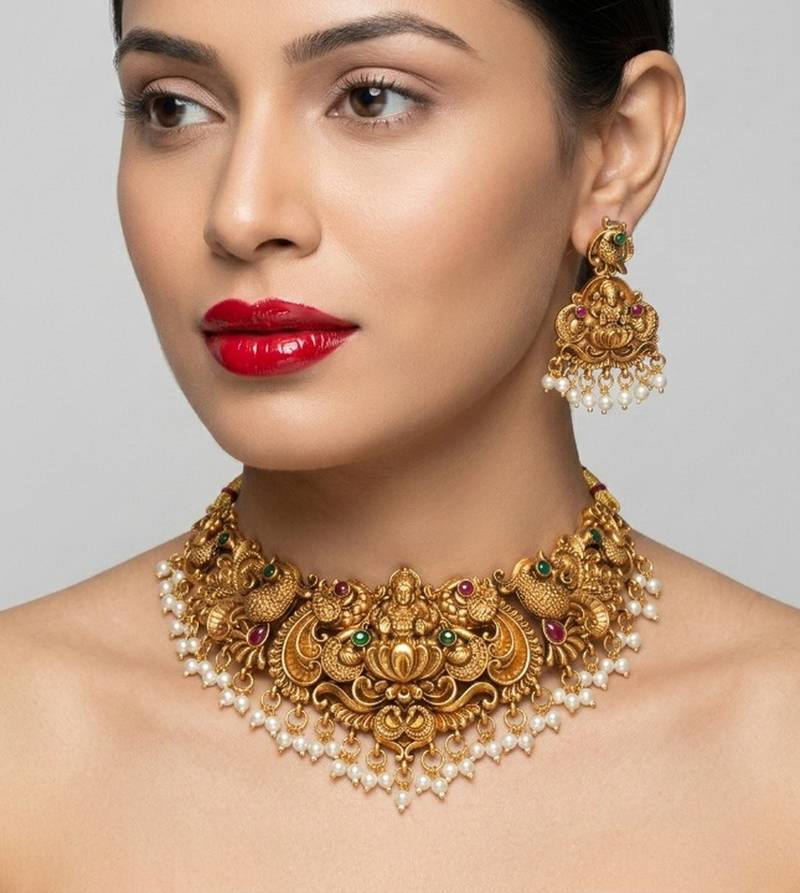
- Layering tradition: A mix of three often includes a close-fitting band plus another looping just below the throat. Five altogether bring fullness, balancing bold links up top with slender trails toward the chest.
- Symbolism: Wrapped inside every tier is a quiet promise of wealth, strong marriage, and roots that run deep through generations.
- Pairing: From stitching color to how the collar sits, necklaces follow along. The shape of the top edge matters just as much as fine touches on the garment.
2 Mangalsutra Styles
- Regional Variations: From region to region – North India, Maharashtra, the southern states, Bengal – the patterns shift. Each area shapes its own look without copying another.
- Modern Mangalsutra Designs: Folks today lean toward sparklers, tiny dangles, and simpler shapes that fit regular outfits.
- Gold vs Black Bead: Beads of black guard against dark forces, yet gold stands for wealth. Prosperity shines through golden tones, whereas shadowed spheres deflect harm.
3 Wedding Ceremony–Specific Necklaces
- Engagement: Light kundan or diamond necklaces.
- Wedding Day: Chunky necklaces sit close to the throat. Gold chains stack in uneven rows.
- Reception: Statement polki or pearl necklaces.
- Post-Wedding Rituals: A few thin gold links strung together. A small mangalsutra holds quiet weight.
Indian Necklaces by Material Type
How long something lasts often ties back to what it’s made of.
- Gold Necklaces have been a top choice in traditional jewelry for generations. It is a reflection of history and tradition.
- Silver Necklaces fit right into laid-back moments and work fine for everyday.
- The charm of diamond necklaces goes well with fancy gatherings and high-class parties.
- Minimal aesthetics of pearl necklaces go with quiet mornings and soft wedding styles.
- Gemstone Necklaces get you a pop of color that matches both everyday and fancy outfits.
- The small build of beaded and thread Necklaces makes them easier to carry around without any heaviness.
Modern Takes on Indian Necklace Design
- Indo-Western Necklaces: They blend ancient motifs with modern art and look lovely on fusion outfits.
- Minimal Gold Necklaces: These are designed for daily wear with simple chains and a signature pendant.
- Fusion Chokers: This style is a mix of pearls, polki, and enamel all into one with modern cuts.
- Celebrity-Inspired Designs: These are the reimagined versions of red-carpet and bridal looks in mainstream trends.
- Everyday Wear vs Festive Wear: Include simpler designs for daily and heavier ones for grand festive days.
Choosing the Right Indian Necklace
- Based on Face Shape: Long necklaces for a round face and chokers for an oval face.
- Based on Neckline: Deep necklines look beautiful in long haars while high necklines look great in chokers.
- Based on Outfit Type: Go with statement pieces for heavy sarees and minimal jewelry with lighter outfits.
- Based on Occasion: Pick layered or gemstone pieces for any formal occasion.
- Based on Body Type: Petite frames suit shorter lengths, taller builds can carry long styles.
Styling Indian Necklaces the Right Way
- With Sarees: Chokers with silk sarees and long haars with deep blouses are the major showstopper.
- With Lehengas: Layer chokers with medium-length necklaces to get a perfect royal look.
- With Anarkalis: Pick statement pieces that complement the silhouette.
- With Gowns and Fusion Wear: Minimal jewelry, like pendants or chains are the only classy option for these dresses.
- Layering Dos and Don’ts: Don’t go heavy with all the layers. Try mixing and matching wherever you can to maintain the balance.
Caring for Indian Necklaces the Right Way
- Clean your gold and gemstone necklaces only using a mild soap with lukewarm water.
- To store your heavy necklaces, get a padded box to prevent any bending or chain stress.
- Make sure not to spray perfume on them and keep them away from any harsh chemicals.
- Get your gemstones checked annually and take your jewelry for repolishing for a lasting shine.
A Smart Buying Guide for Indian Necklaces
- Online vs Offline Buying: When you’re buying online, you get a larger variety. But, offline buying ensures that you inspect the product physically.
- Hallmarking and Authenticity: It is required that you look for BIS hallmarking while buying to make sure of the authenticity.
- Craft Verification: Inspect the pieces like kundan and meenakari for hand-finished detailing.
- Pricing Factors: There are many things that affect the prices, such as metal purity, gemstone quality, and brand name.
- Custom-Made vs Ready-Made: Personalised pieces tell more about your story, while ready-made pieces are more trend-centric.
Indian Necklaces for Global Buyers
- Shipping Considerations: Choose the brands and platforms with insured shipping and promising quality.
- Customs and Duties: Cross-check for any country-specific import taxes that you might have to pay.
- Sizing and Weight Clarity: Check the length, weight, and size of the jewelry before making a final call.
- Styling for Non-Indian Outfits: Pair chokers with gowns, haars with deep-neck outfits, and minimal chains for daily western fits.
FAQs
1- What is the most traditional Indian necklace?
The mangalsutra and haar are considered the most traditional Indian necklaces.
2- What is the difference between kundan and polki necklaces?
Kundan uses polished gemstones set in gold, while polki features uncut natural diamonds.
3- How many necklaces does an Indian bride wear?
An Indian bride typically wears two to five-layered necklaces.
4- Which necklace suits a heavy bridal lehenga?
A layered kundan or polki haar paired with a choker suits a heavy bridal lehenga best.
5- Are Indian necklaces suitable for daily wear?
Yes, minimal gold chains, pendants, and lightweight chokers are perfect for daily wear.